CLARITY THAT LASTS.
Find my ribbon
THE RIBVORA BLOG

Useful answers.
Better ribbon decisions.

Specification guides, material insights and practical buying advice for label converters and distributors.

Specification · Application testing · Procurement · Replenishment
EXPLORE THE NOTEBOOK

All articles

13 articles

FROM READING TO A USEFUL SPECIFICATION

Have a real
application in mind?

Turn what you know into a brief: printer, material, dimensions and use conditions. Unknown details are fine.

Build my specification brief
CHOOSE A USEFUL READING PATH

Read for the next decision.

01 / READING PATHS

Start with the missing specification

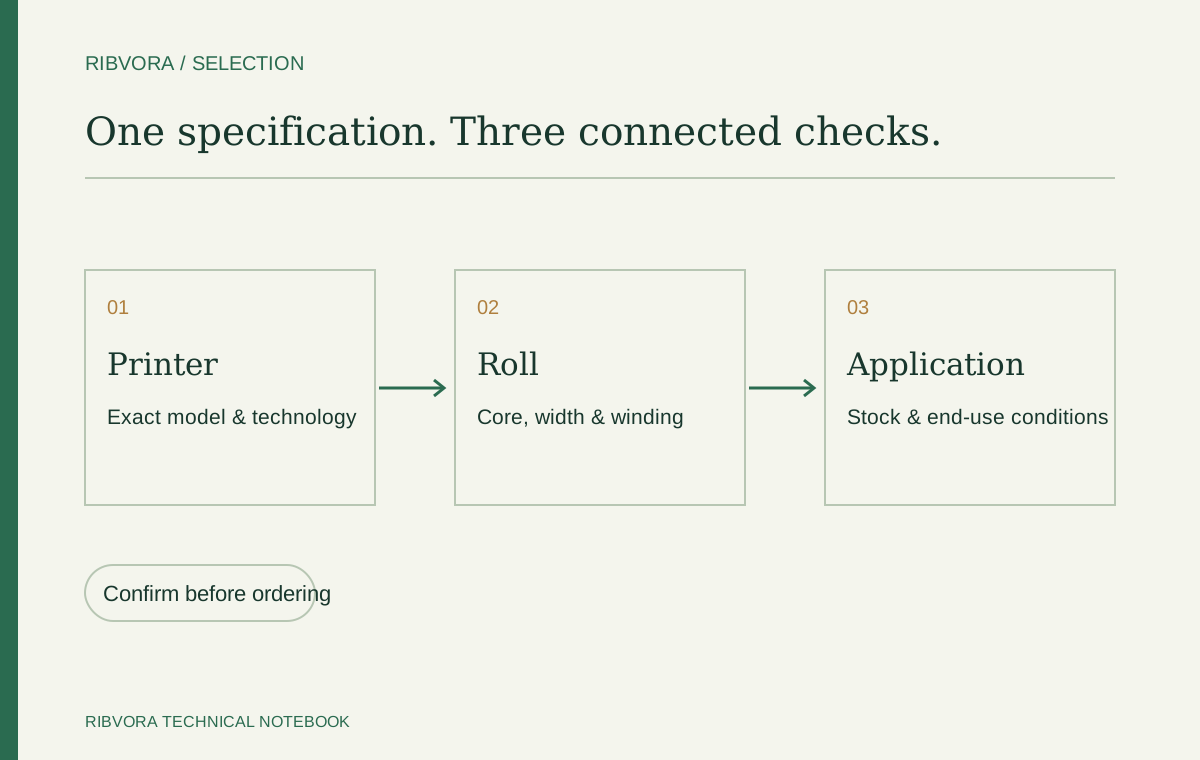
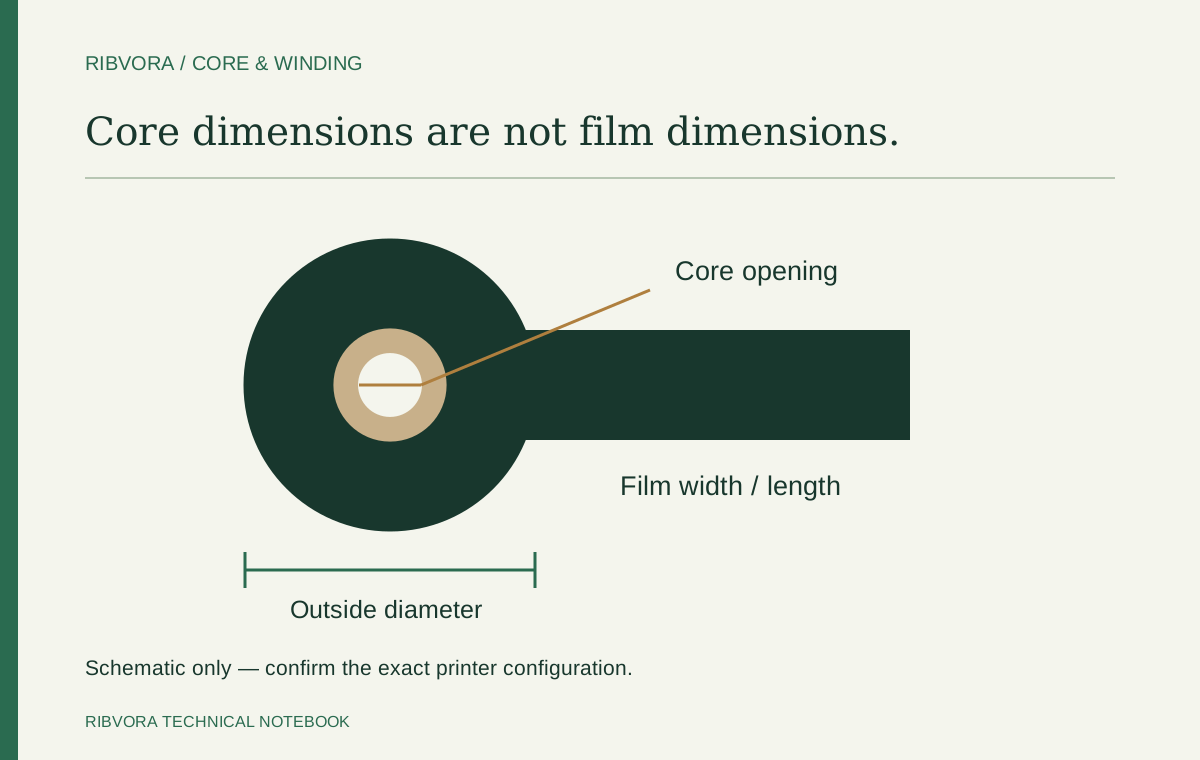
If you have a printer or an old roll but not the complete configuration, open the selection and core guides. Then use the specification finder to separate known details from those awaiting confirmation.

Start with the missing specification
Start with the missing specification · Technical illustration.
02 / READING PATHS

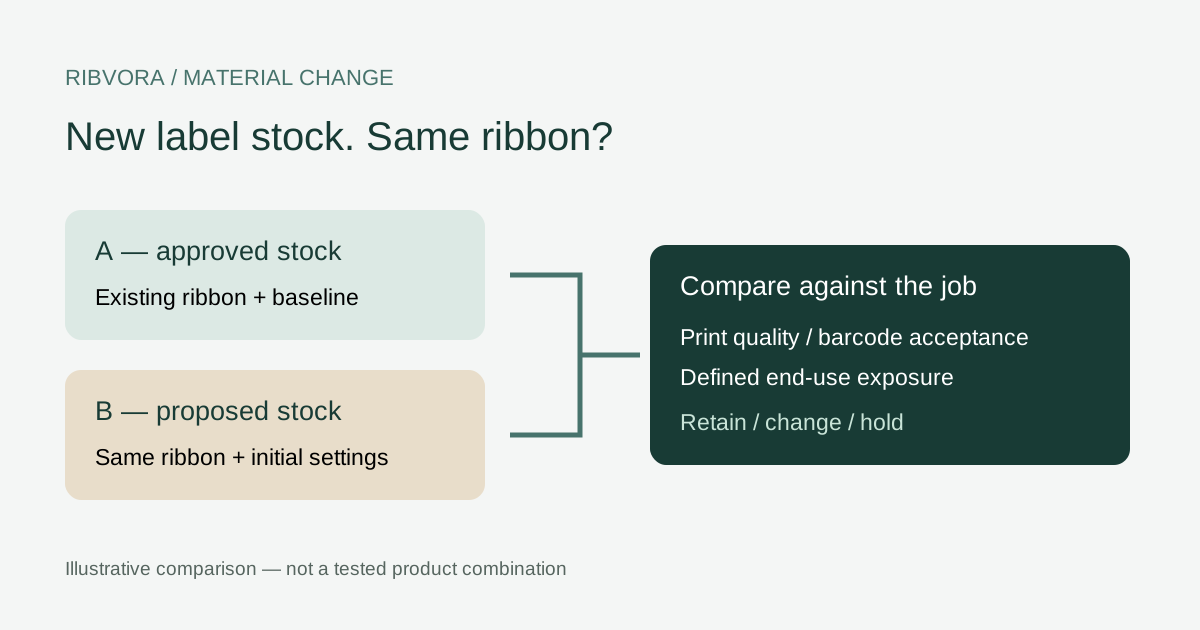
Read material advice against your actual stock

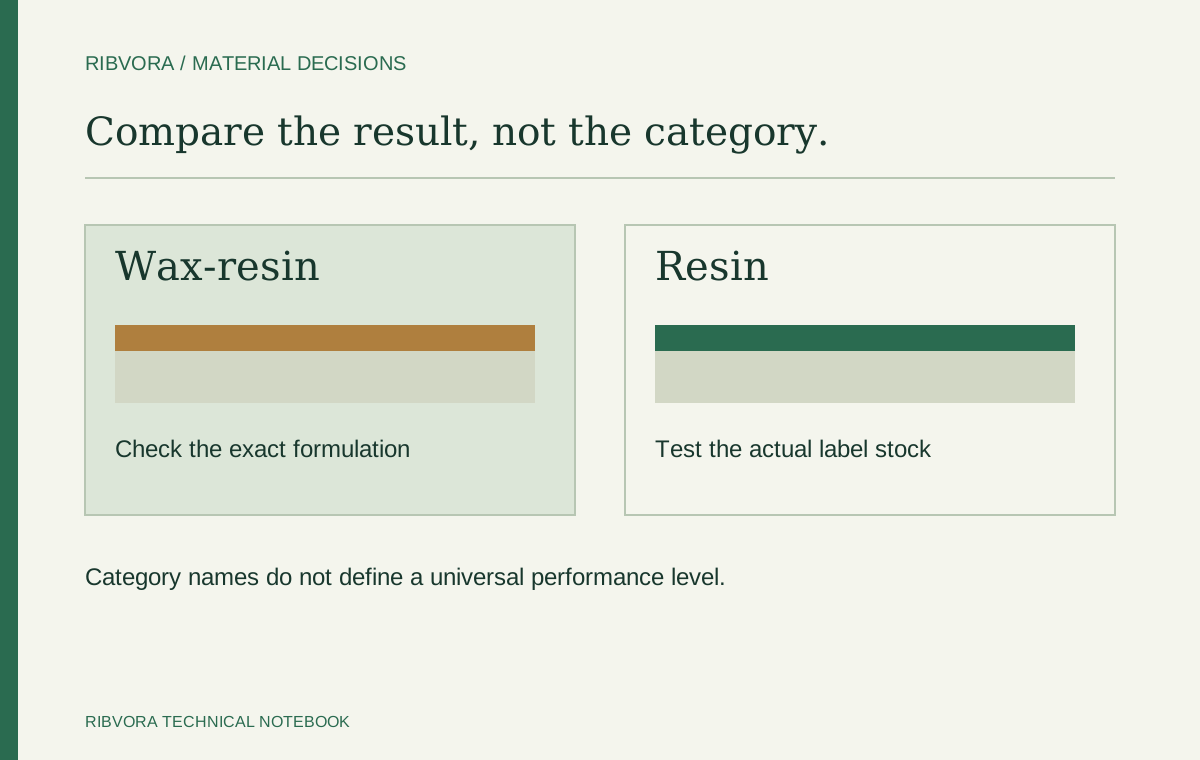
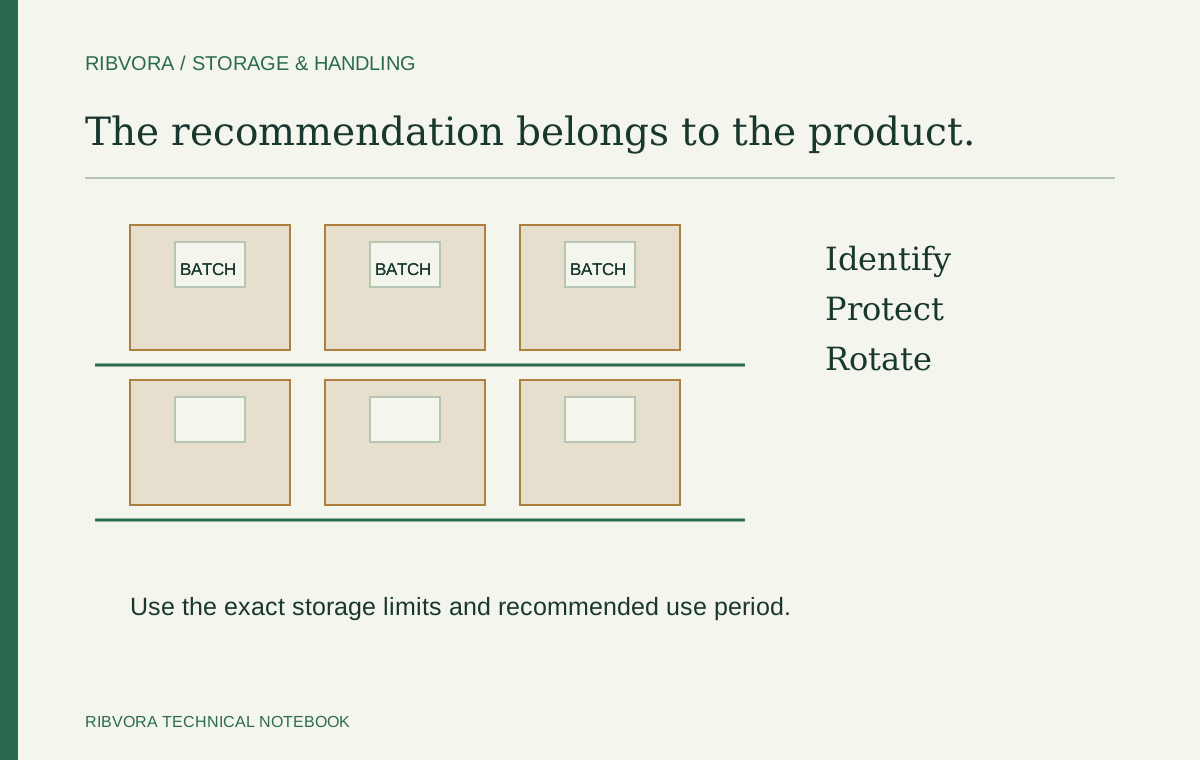
Use the PET and PP guides with the stock supplier reference and coating. A general material article cannot approve a formulation on a different surface. Keep the intended artwork and application in the trial.

03 / READING PATHS

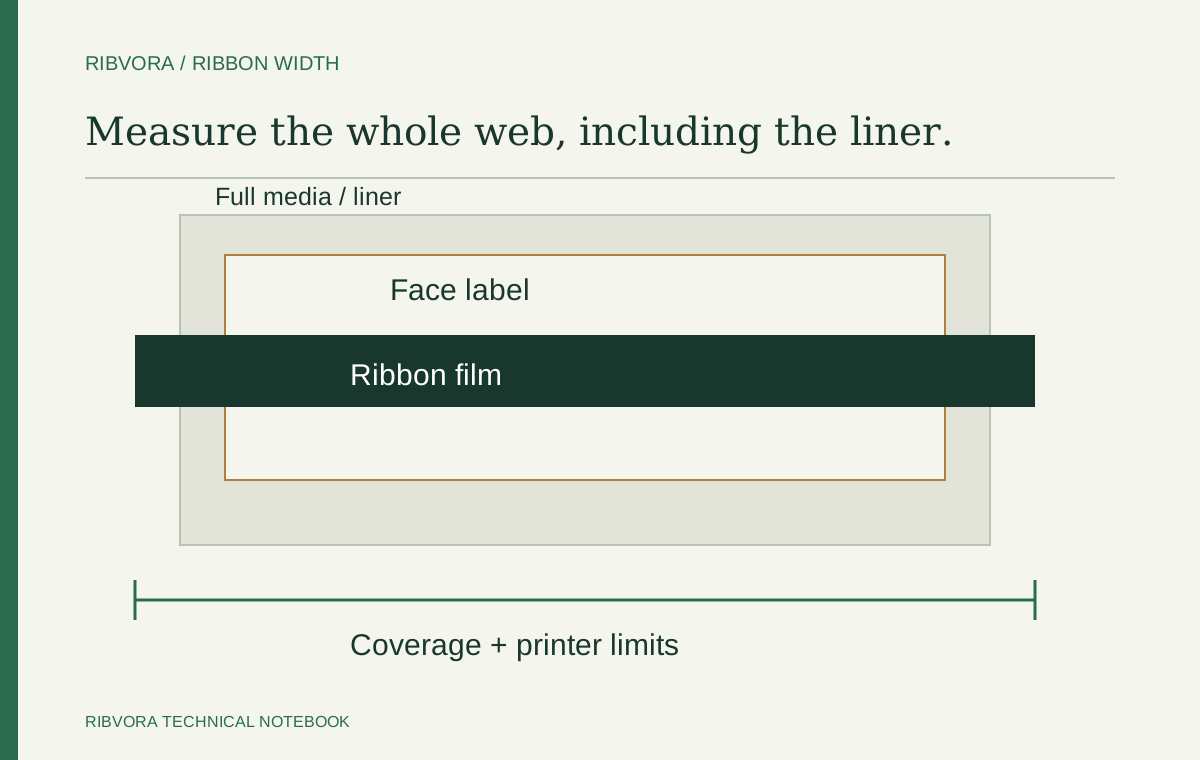
Investigate a print defect without losing the baseline

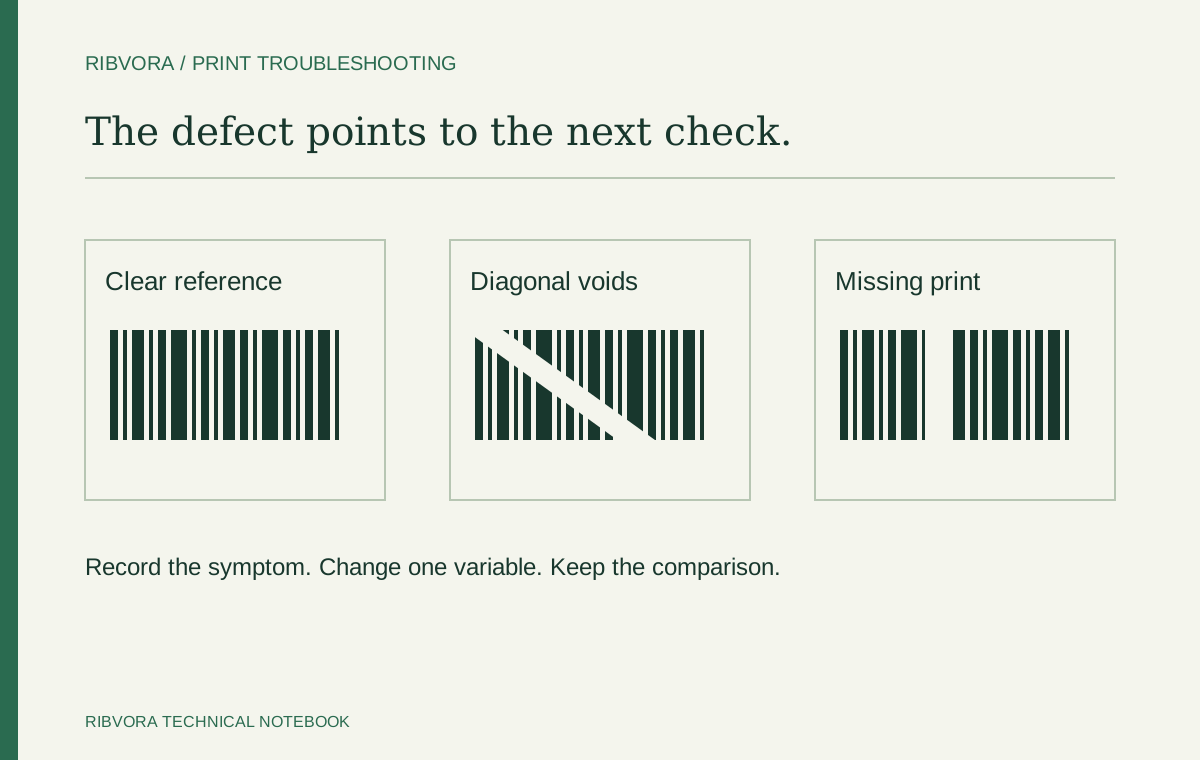
The troubleshooting guide helps organize loading, settings and material questions. Record the failed print and change one variable at a time. Follow equipment instructions before mechanical adjustments.

Investigate a print defect without losing the baseline
Investigate a print defect without losing the baseline · Technical illustration.
04 / READING PATHS

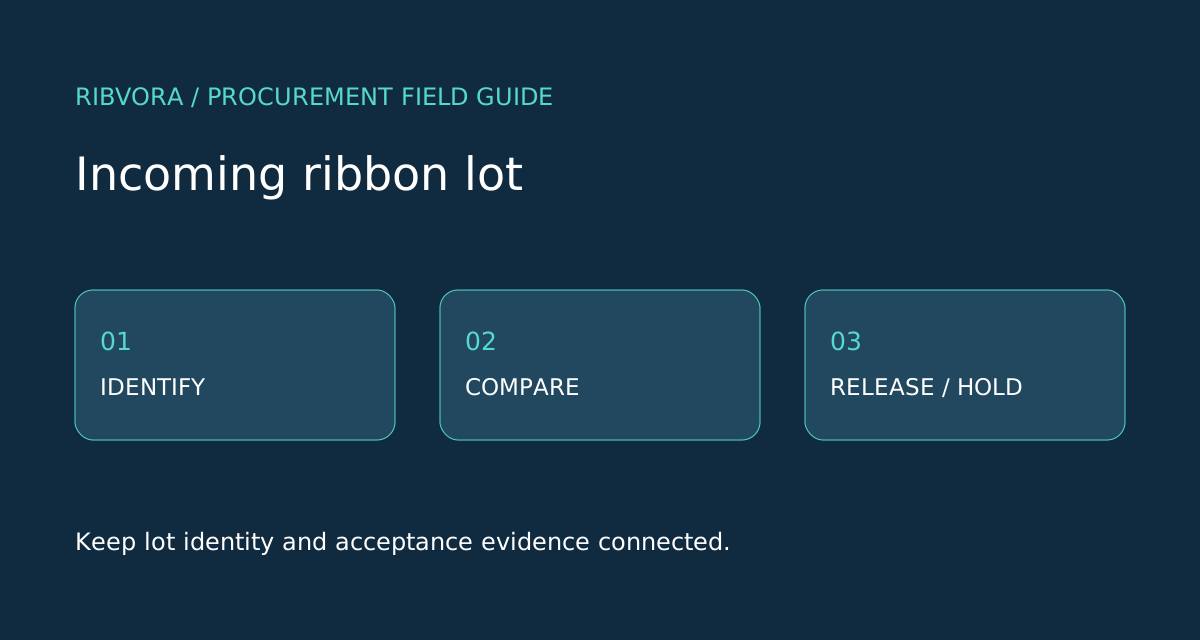
Turn supplier replies into a comparison

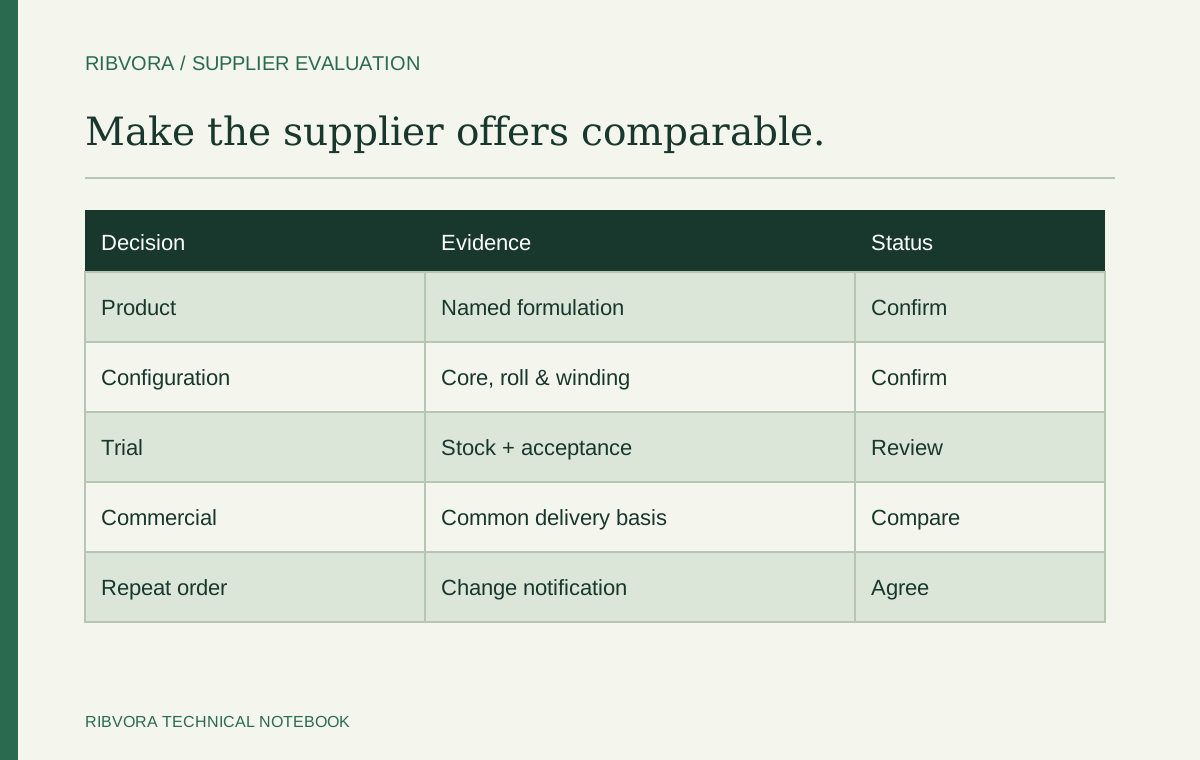
Use the supplier checklist and RFQ template together. Confirm that formulation, configuration, quantity and delivery basis agree before comparing the price. Identify unanswered lines instead of assuming equivalence.

05 / READING PATHS

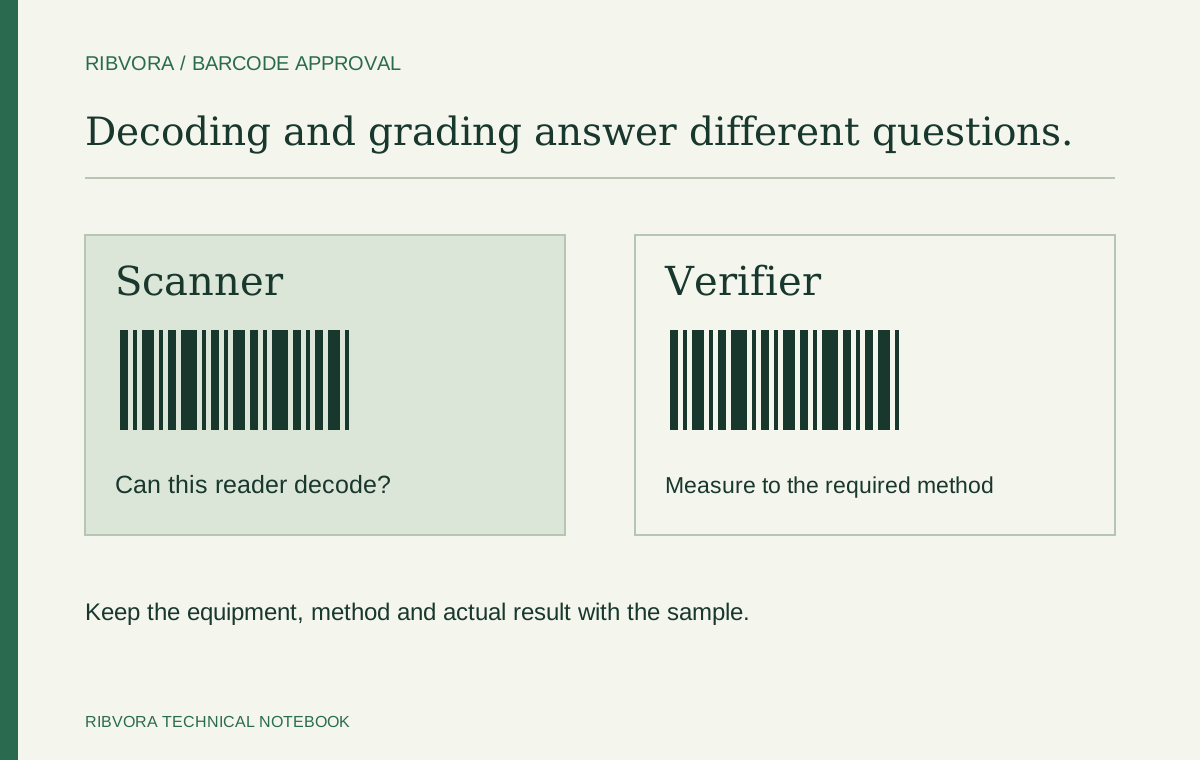
Keep barcode evidence within its scope

A reader decode and formal verification answer different questions. Use the method required for your application and retain actual results. Assess relevant exposure effects before releasing a printed combination.

Keep barcode evidence within its scope
Keep barcode evidence within its scope · Technical illustration.
06 / READING PATHS

Use measured accepted output for cost decisions

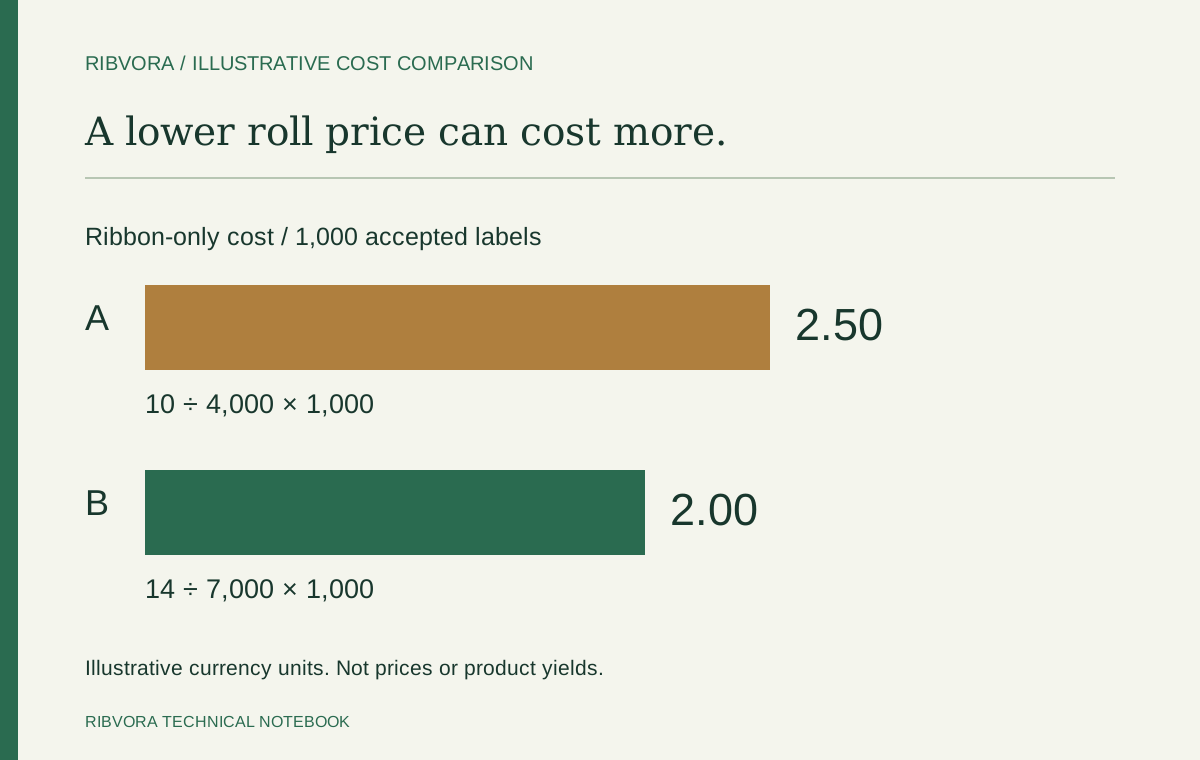
The cost guide and calculator keep the numerator and denominator on the same boundary. They do not supply prices or predict yields. Label examples and estimates clearly before using the result in purchasing.

07 / READING PATHS

Check the source and scope of a technical claim

Follow the linked primary documentation and check the product reference, intended stock and test conditions. A statement about another formulation does not establish the performance of your proposed combination. Keep the relevant document and revision with the purchasing decision.

WhatsApp