Define what must remain readable
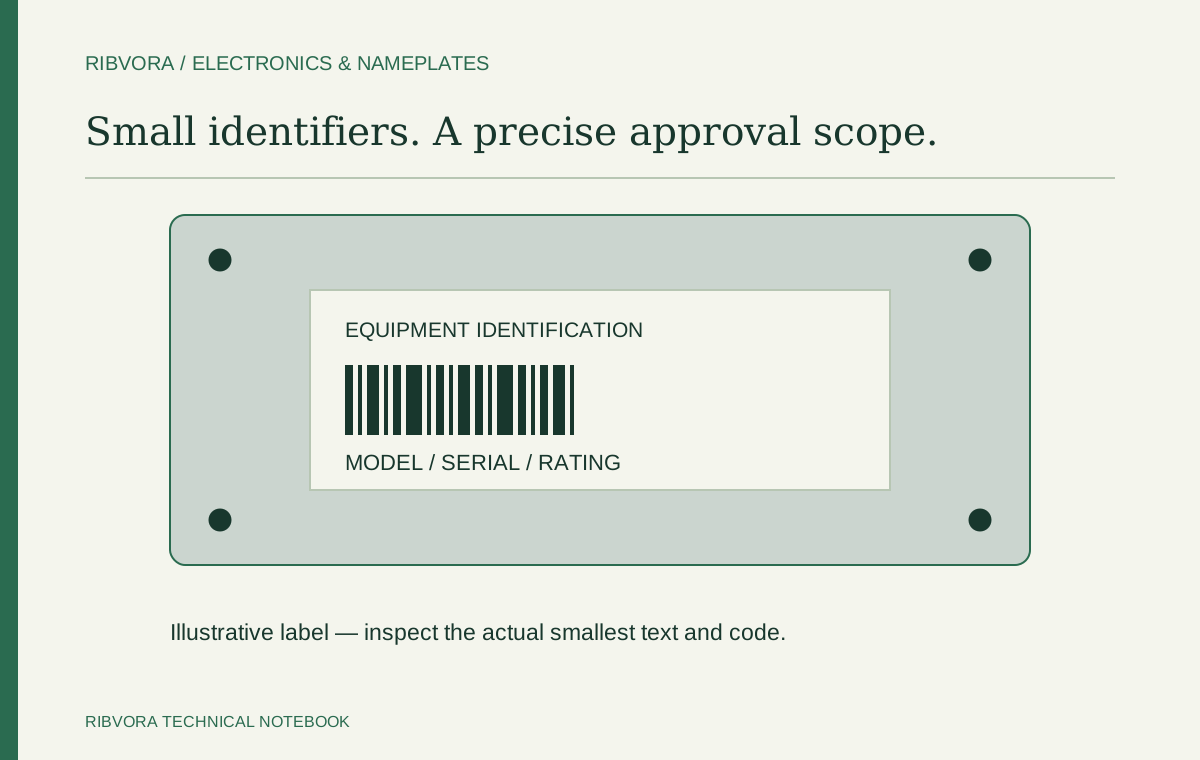
Electronics and equipment labels may carry serial numbers, model references, ratings and barcodes. Include the actual production artwork when evaluating a candidate ribbon.
Judge the smallest characters and densest codes, not only a large demonstration barcode. Print resolution and design dimensions affect the achievable result.
Match the complete label construction
Confirm the face stock and coating, then identify the adhesive and application surface separately. A durable print does not prove the adhesive will remain suitable.
Make exposure conditions explicit
Identify cleaning agents, handling, installation environment and expected service life. Specify any performance or approval requirement before asking for a sample.
- Exact label stock and top coating
- Printer model, resolution and ribbon configuration
- Production artwork and critical text / code dimensions
- Defined exposure protocol and acceptance criteria
Keep compliance within its scope
Where an application calls for a recognized label system or other certification, review the actual documents and approved combinations. Do not infer approval from the fact that a ribbon is described as resin.
Move from trial to repeat specification
Record the selected formulation, roll configuration, label stock and printer settings. Any later material change should trigger review of the relevant test results.
Start with the smallest identifier
Use the real model line, serial reference and code size. A supplier print with larger text cannot establish the readability of the intended label. Confirm the artwork revision and printer resolution before judging the sample.
Treat the enclosure and label as separate references
Record the face stock and coating for print selection. Record the enclosure surface and adhesive separately for label-construction review. Durable ink is not evidence that a label will remain attached to every housing.
Trace the label through assembly
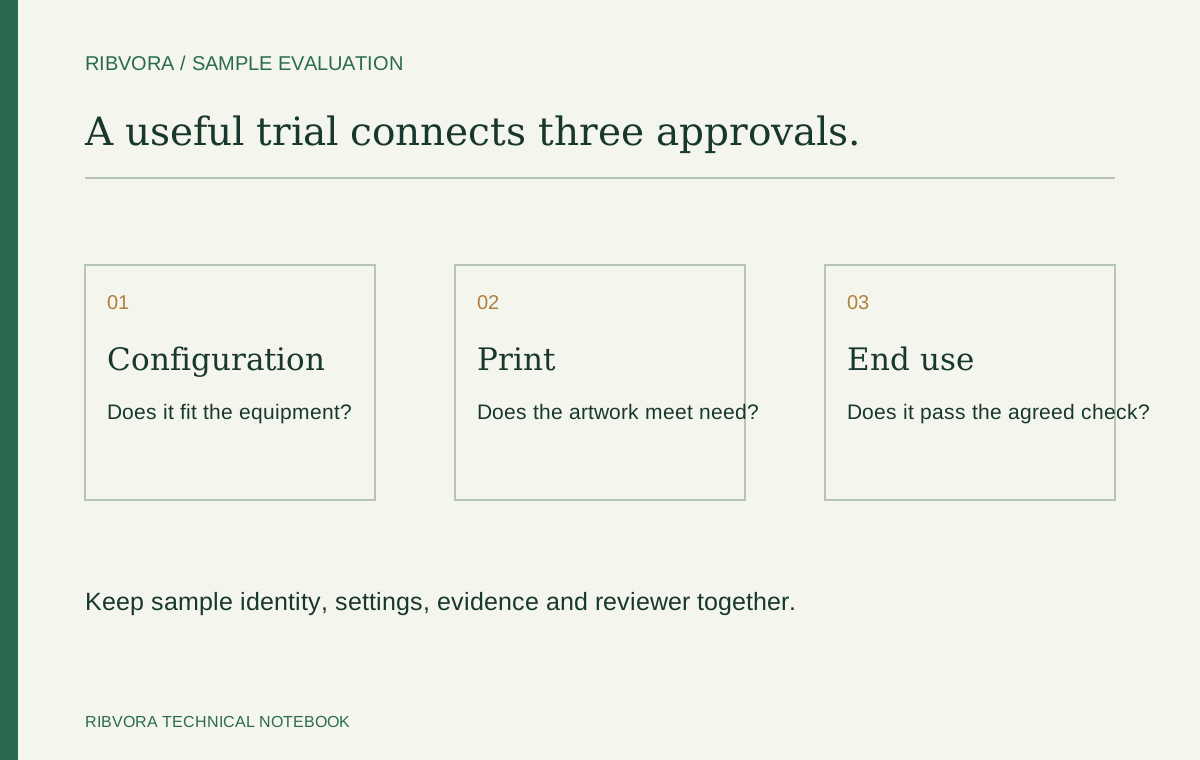
Identify whether the label is printed before assembly, cleaning or another production step. Test the process the printed label will actually encounter. Do not assume that an exposure relevant to another component applies to this label.
Make cleaning requirements specific
State the approved cleaner, concentration, contact time and wiping method when those are relevant. Keep an unexposed control and inspect the critical text and codes afterward. Do not improvise a harsh chemical test without an agreed method.
Check any recognition requirement at combination level
Where a customer requires a recognized marking system, obtain the actual scope and identifiers from the responsible supplier or assessor. A ribbon family name or a logo on a generic brochure does not establish the required combination.
Prepare an engineering-to-purchasing handover
Keep the technical approval alongside the quoted roll configuration. The purchasing team needs to know what may be changed and what triggers a review.
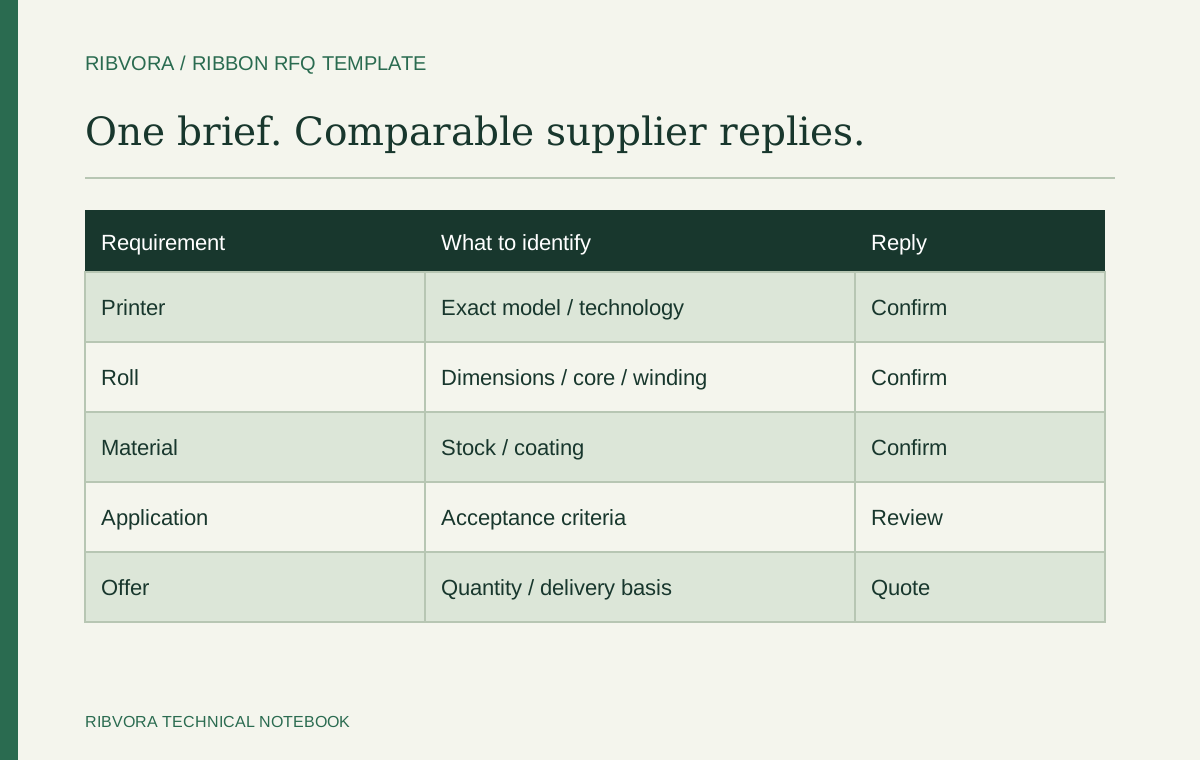
| Engineering record | Purchasing reference |
|---|---|
| Stock and artwork revision | Approved label reference |
| Formulation and settings | Quoted ribbon reference |
| Test and scope | Approval identifier and limitations |
Keep replacement enquiries focused
Send a current roll label, printer model, stock reference and the exact problem to solve. If the existing print works, say what must remain unchanged. If it fails, include a before/after photo and the step that produced the change.
Further reading & sources
These sources support general technical guidance. Product approval requires evidence for the exact formulation and application.