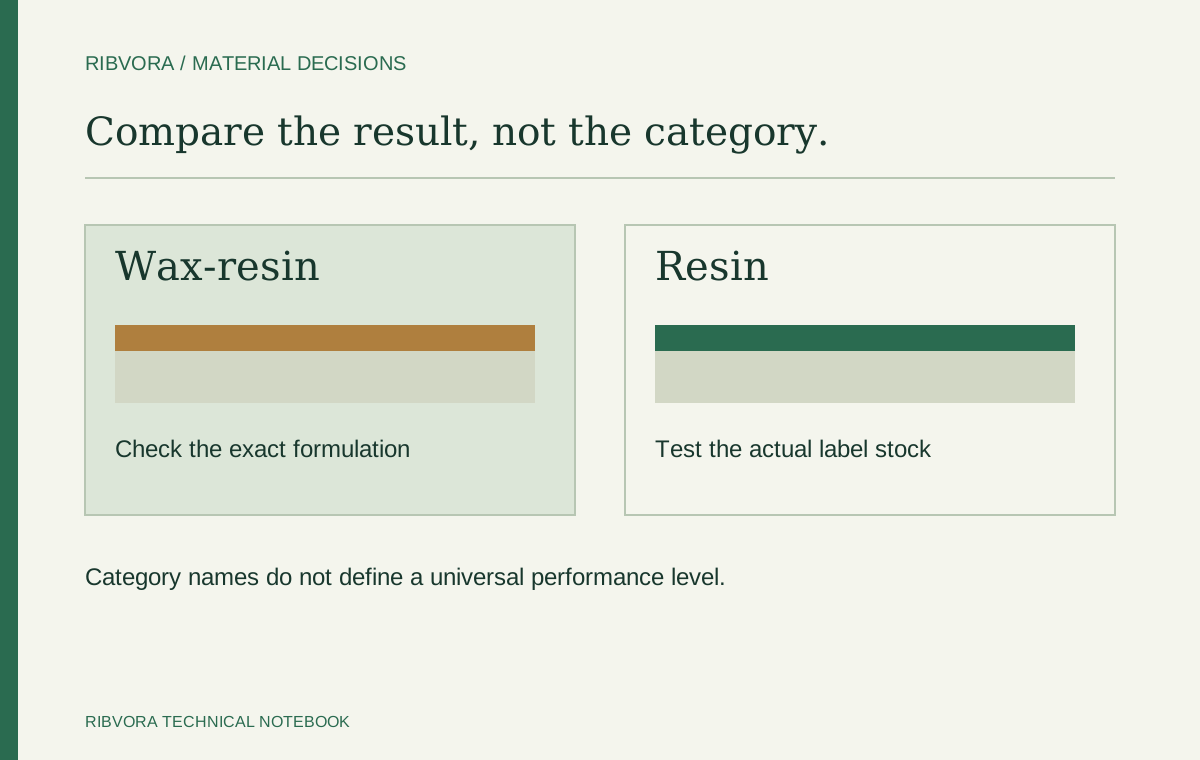
Choose between resin and wax-resin by testing the specific formulation on the actual label coating under the required print and exposure conditions. Resin is not automatically a compatible upgrade, and category names alone do not establish performance.
What the categories tell you
Wax-resin and resin are broad thermal transfer ribbon categories. Suppliers offer multiple formulations within each category, designed for different substrates and requirements.
The category name does not establish a precise ingredient percentage or universal performance level. Use the specific formulation datasheet and testing evidence.
Compare on the actual application
Consider the label coating, printer technology, speed and exposure requirements. A resin formulation may be an appropriate candidate for demanding synthetic label uses, while a wax-resin option may meet other applications.
| Decision point | What to evaluate |
|---|---|
| Material compatibility | Print transfer and adhesion to the exact face stock |
| Required durability | Defined handling, temperature or chemical exposure |
| Print detail | Fine text, barcode dimensions and resolution |
| Production setup | Supported printer technology and practical settings |
| Commercial case | Cost at the approved performance level and agreed quantity |
A higher category is not an automatic upgrade
Changing from wax-resin to resin without checking the coating can leave the original problem unresolved. Review the print setup and label match before assuming that category alone explains a defect.
Compare approved outcomes, not just roll prices
A useful comparison includes material use, accepted print quality and repeatability under the production conditions. Avoid estimating savings from purchase price alone if the competing samples have not passed the same requirements.
Set up a controlled trial
Use the same label stock and artwork. Record candidate references and appropriate printer settings. Apply the agreed test protocol and compare the results against the same acceptance criteria.
Decide from the failure you need to prevent
Write down the event that would make the label unacceptable. “Better quality” is too vague to test. A more useful requirement identifies the damaged information, the exposure that causes the problem and the pass condition.
| Observed need | What to compare in a trial |
|---|---|
| Print smears after handling | Defined rub conditions on the actual label surface |
| Fine text is incomplete | The actual artwork, resolution and appropriate settings |
| Print fails after cleaning | The named cleaner, concentration, contact time and method |
| Results vary between materials | Exact coating reference and candidate formulation on each stock |
Do not turn category names into a price argument
A resin roll with a higher purchase price may or may not be commercially justified for your application. Establish acceptable output first, then compare the full cost of the approved options.
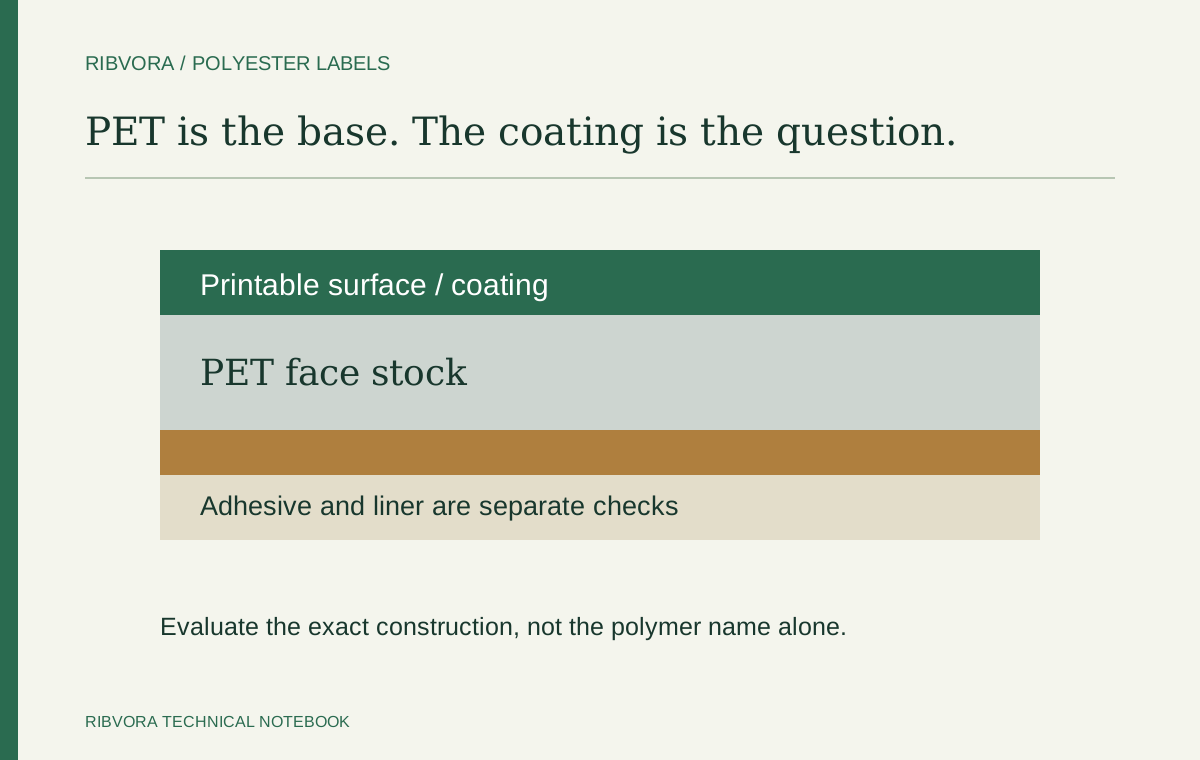
For a converter, include any additional handling, repeated setup or rejected output actually observed in the trial. Do not invent a percentage saving from a generic durability claim. For a distributor, make the approved material and use conditions clear to the end customer.
What a useful supplier response should contain
The response should identify a candidate formulation, the intended material scope and any missing conditions that prevent a reliable recommendation. It should separate confirmed specifications from points that need testing.
Send one label reference, one printer setup and one defined problem when asking for a comparison. You can then agree the next test and review commercial terms for the configuration that meets the requirement.
Identify what is actually failing
Ask whether the defect exists immediately after printing or appears after a process step. A transfer problem, a coating mismatch and an exposure failure are different questions. Keep a control print so the comparison is visible.
Do not turn a family name into a resistance threshold
A formulation’s specific documentation and the tested label combination define the evidence. Category names do not provide a universal chemical concentration, service temperature or useful life.
Keep the cost decision downstream of approval
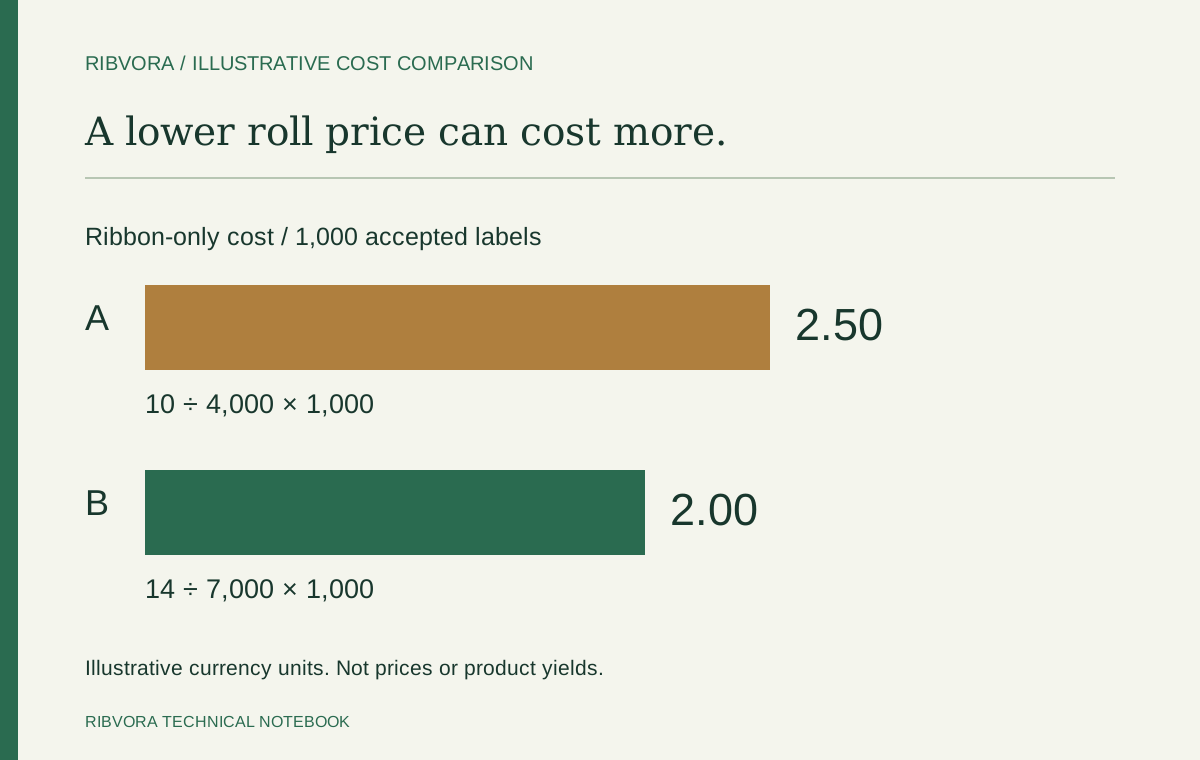
Compare candidates that satisfy the required application scope. Use measured accepted output and the same commercial basis. A lower cost per roll cannot compensate for a required label failing its acceptance check.
Write the result so purchasing can reproduce it
Record formulation, stock, roll configuration and relevant settings. Note which uses were evaluated and which remain open. This prevents a successful comparison on one coating from becoming a blanket substitution rule.
Further reading & sources
These sources support general technical guidance. Product approval requires evidence for the exact formulation and application.