Identify the surface, not just the polymer
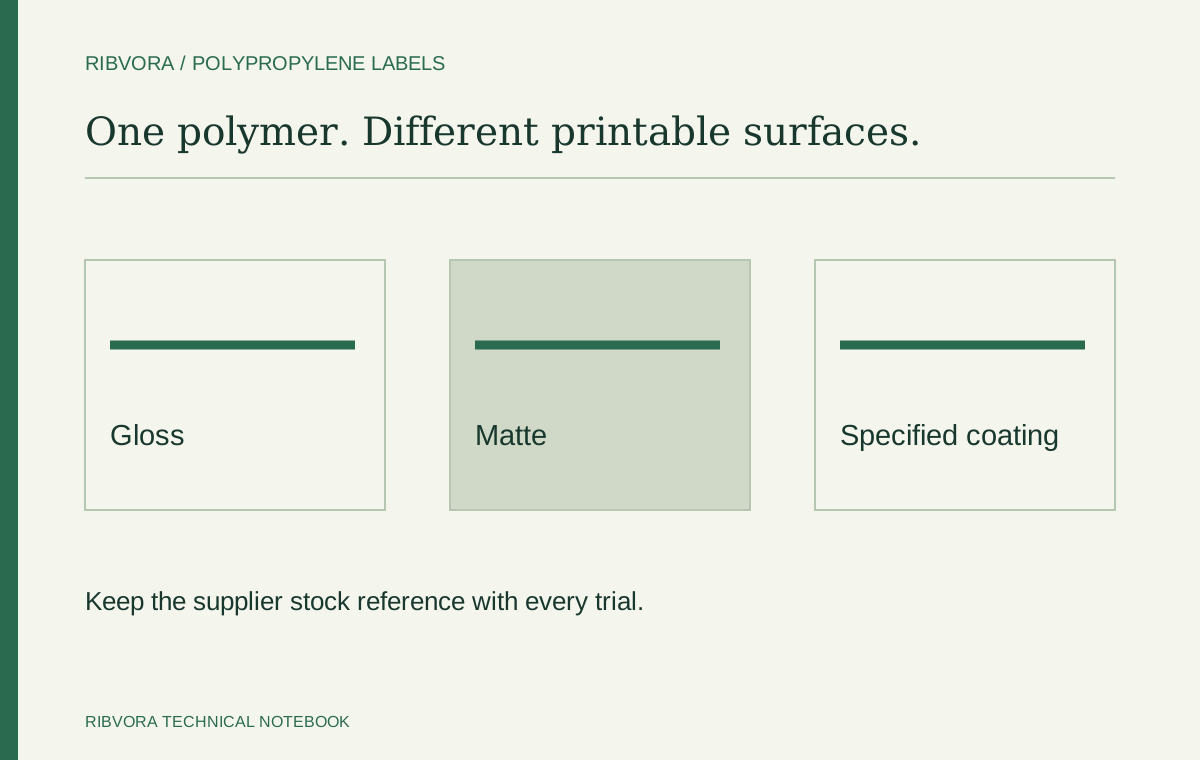
Ribbon suppliers list polypropylene among the synthetic substrates used in thermal transfer printing. However, individual coatings and finishes can respond differently.
Provide the label product reference and clarify whether it is a thermal transfer-compatible stock. A blank film label is not automatically suitable for a particular ribbon.
Confirm the intended job
Describe what the printed label must endure. A short-life identification job and a repeatedly handled label require different evidence.
- Print content and barcode dimensions
- Handling and contact with other surfaces
- Temperature and chemical exposure, if relevant
- Expected label life and acceptance requirements
Compare the appropriate formulations
Both resin and some wax-resin formulations may be considered for suitable synthetic stocks. The decision should follow the required print quality and exposure performance, not a rule that one material always requires one ribbon category.
Evaluate before choosing
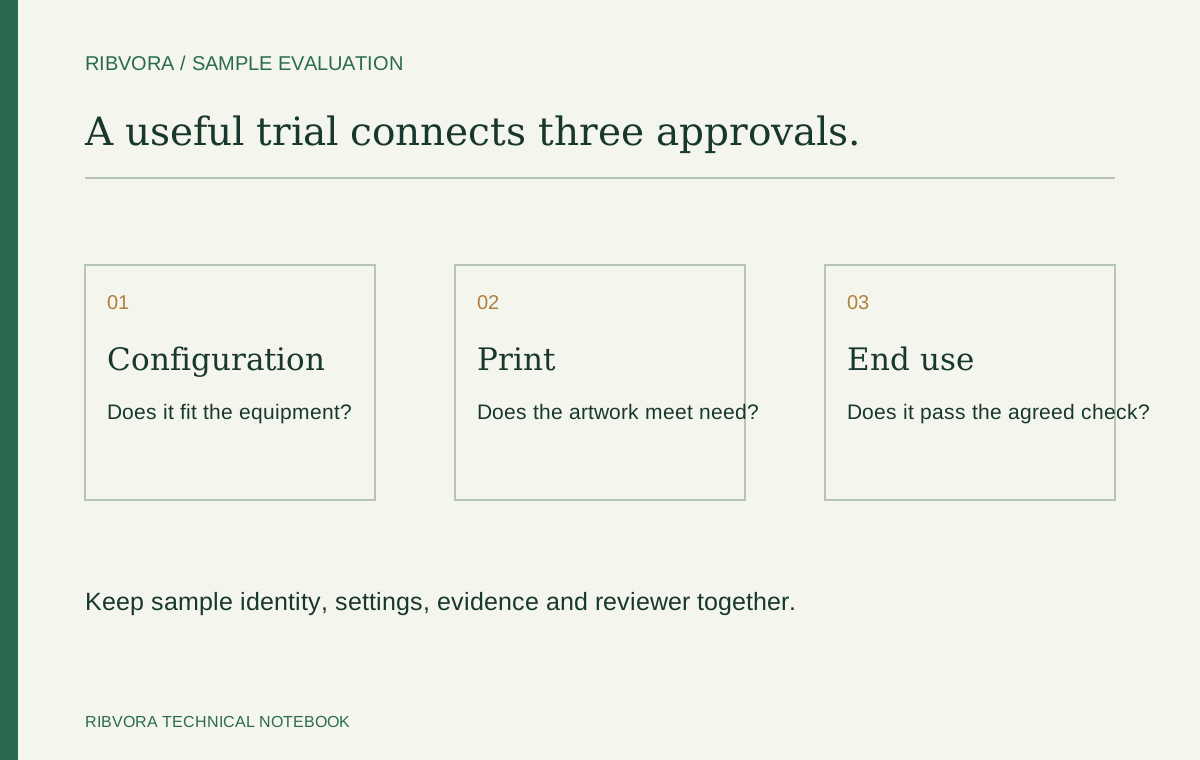
Run a controlled trial on your actual PP stock. Check the full design, including the smallest elements, and document any smudging, scratching or transfer defects.
If results are poor, review the ribbon-and-coating match and the printer setup together. Raising heat indefinitely can create other problems.
Prepare your procurement brief
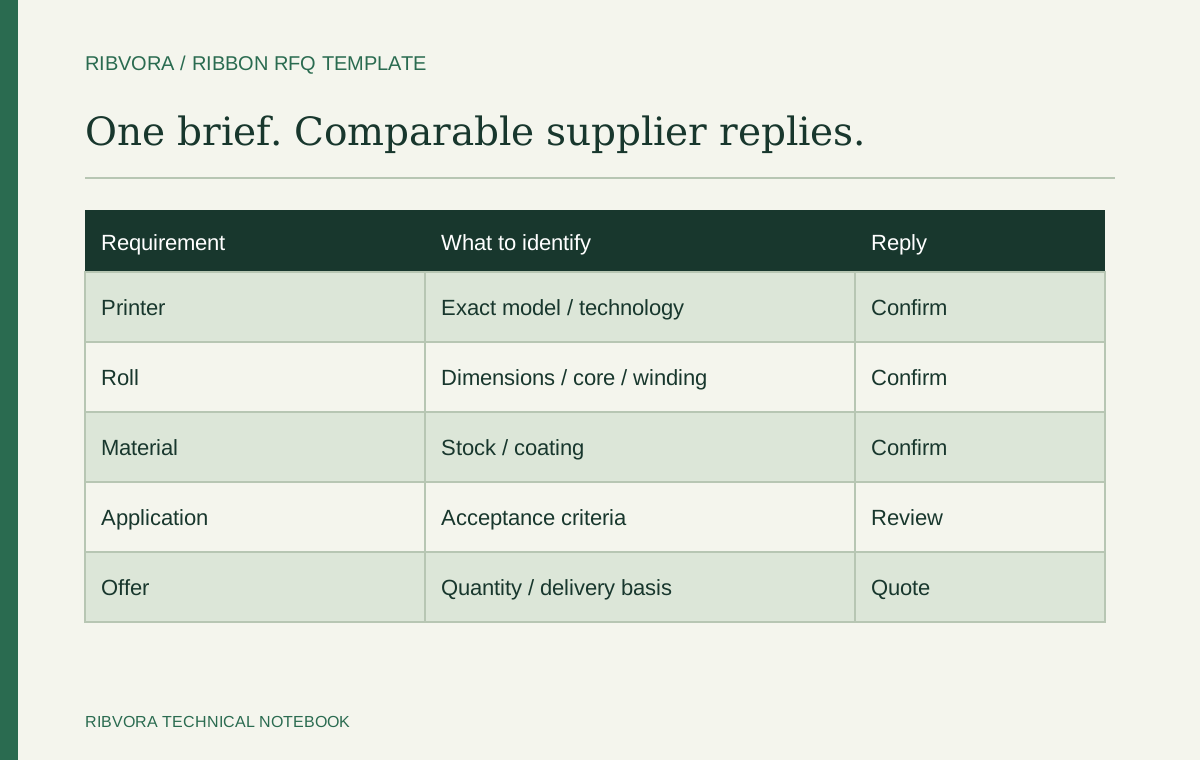
Include the exact label reference, printer details, current roll dimensions and volume. Keep the sample approval and subsequent order specification connected so the configuration is not lost between technical review and purchasing.
Ask whether the stock was made for thermal transfer
The same polymer can be supplied with different surface treatments and printing intentions. Obtain the actual supplier reference. A label described as polypropylene is not automatically a suitable receptor for every resin formulation.
Describe the defect before requesting an upgrade
State whether the print is faint at the printer, rubs off during handling or fails after a named process. Those observations lead to different checks. Keep an untouched print beside the affected sample.
Use a finish-by-finish comparison
Do not pool gloss and matte stocks under one trial result. Record the precise finish and coating of each item. If one ribbon is intended to serve multiple PP stocks, document the result on every stock being approved.
Make settings part of the evidence
Record speed and darkness with each sample. Follow the printer and consumable guidance rather than copying a setting number from a different model. A successful print should be reproducible by the production operator.
Count accepted output on the actual job
If two suitable candidates give different waste levels, measure the accepted physical labels within the same trial boundary. Do not estimate savings from roll price alone or treat a short clear print as evidence of full-roll performance.
A PP trial handover for the customer
A converter can supply the stock reference and artwork while the end customer confirms printer configuration and use conditions. Keep the approval scope visible so an agreed sample does not become a universal compatibility promise.
- Identify the stock and finish.
- Confirm the customer’s equipment.
- Agree print and end-use acceptance.
- Retain the accepted configuration.
What to revisit at replenishment
A changed coating, supplier reference or cleaning process is a reason to review the original approval. A new carton with the same generic material description is not enough to establish continuity.
Further reading & sources
These sources support general technical guidance. Product approval requires evidence for the exact formulation and application.