Start with the approved product
Define the application, formulation and mechanical configuration before finalizing the artwork. Packaging should reflect the agreed product specification and provide the information your customers need.
Specify the packaging information
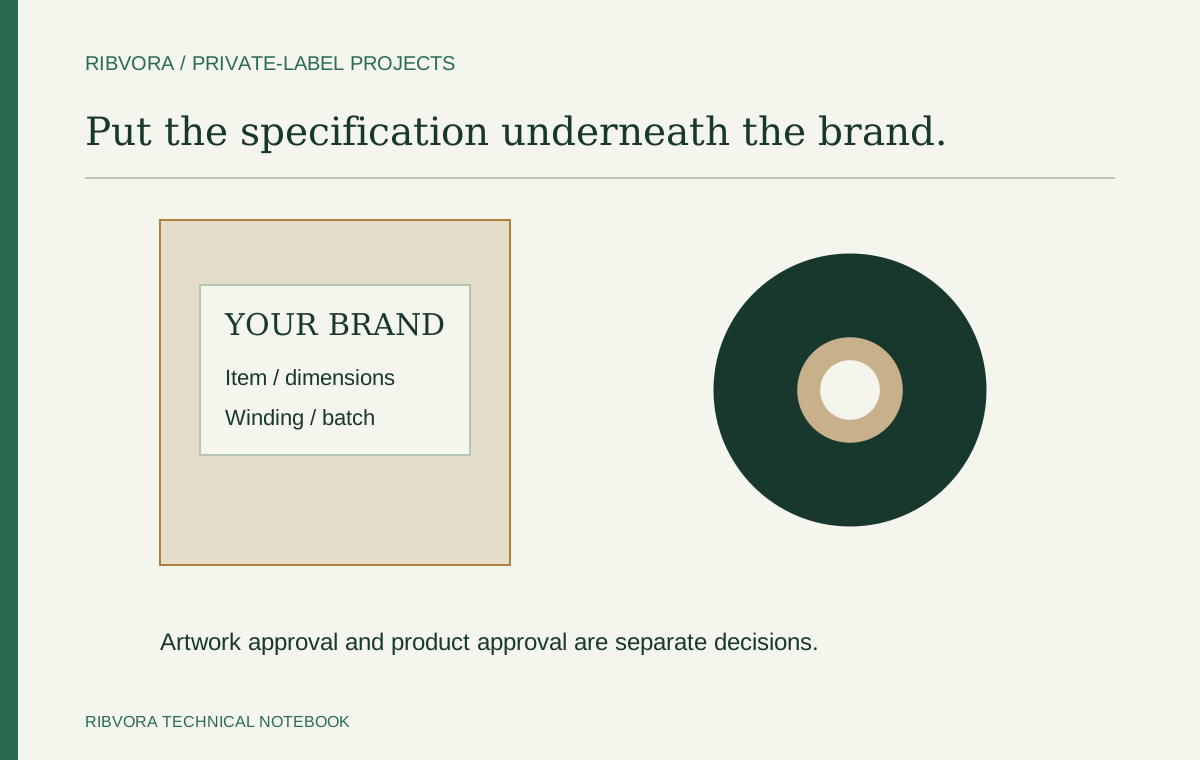
Confirm which information appears on the roll, individual pack and outer carton. Keep it legible and consistent with the approved quotation.
- Your brand and agreed product code
- Ribbon dimensions and core configuration
- Ink side / winding direction
- Batch reference and production identification
- Storage guidance for the exact formulation
Prepare the artwork handover
Provide the logo in a suitable editable format, approved colors and required language. Confirm barcode ownership and validation if packaging includes your own inventory codes.
A packaging proof should be checked against the approved specification before production. Avoid unverified certification logos, test claims or compatibility statements.
Confirm the commercial setup
MOQ, packaging options, artwork preparation, production timing and shipping requirements vary by project. These are reviewed and confirmed in writing before an order is accepted.
Keep your repeat orders consistent
Retain the approved artwork revision with the product specification. Changes to the formulation, roll configuration or packaging should be identified explicitly rather than being absorbed into a generic reorder request.
Give the private-label item a technical identity
Assign an agreed item reference that links the formulation, dimensions, winding and intended material scope. A customer should be able to distinguish it from another roll carrying the same brand but a different configuration.
Create a packaging information hierarchy
Put the configuration and product identifier where the warehouse can read them. Keep brand graphics from obscuring the information needed to select a roll.
| Pack level | Information to agree |
|---|---|
| Roll or individual pack | Item reference, dimensions and winding |
| Carton | Pack quantity and relevant batch identification |
| Supporting sheet | Storage guidance and approved application scope |
Check the proof against the approved quotation
Review spelling, dimensions, ink side, barcode ownership and the final artwork revision. An attractive proof with the wrong winding description can still create a costly receiving problem.
Use claims that the product evidence supports
Do not place resistance thresholds, certification logos or printer compatibility lists on packaging unless the exact scope is documented. Separate a general material suggestion from an application-approved combination.
Agree how revisions are identified
Keep artwork revisions and technical revisions distinct. Ask how the supplier will identify a change to the formulation, roll or pack before it enters a repeat order. Retain the approved proof and relevant correspondence.
Plan the first receiving inspection
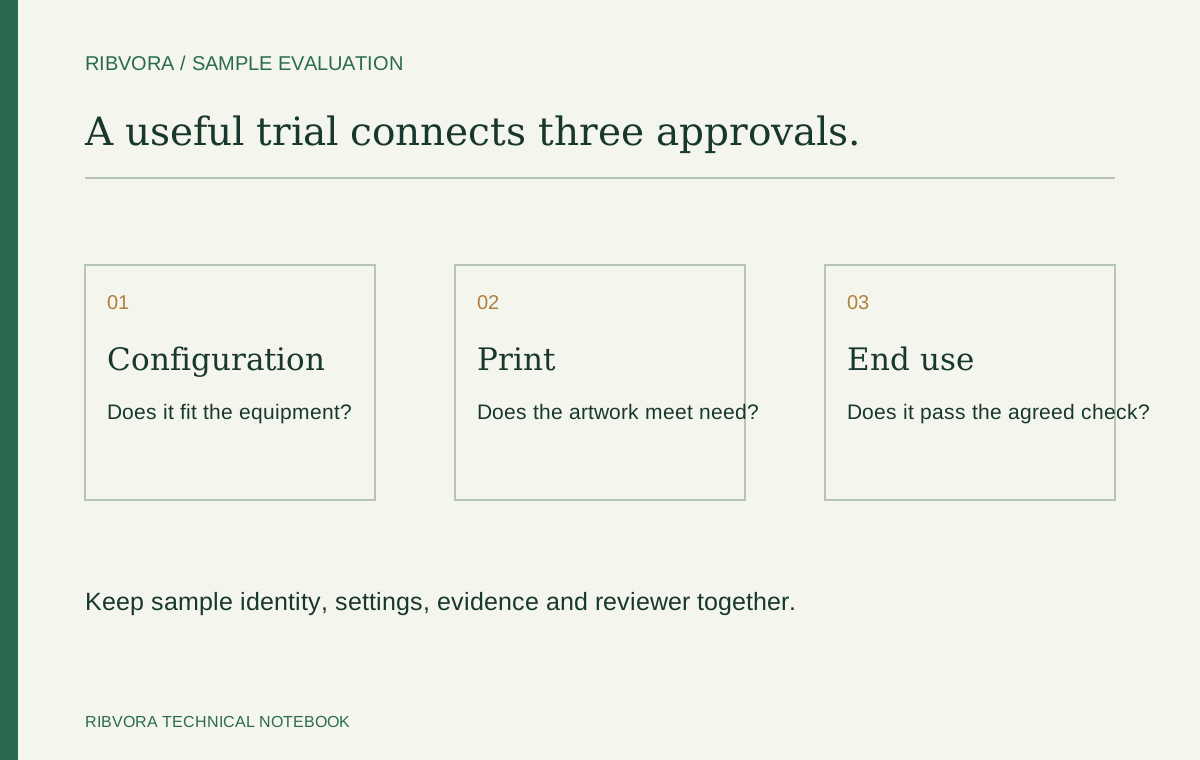
Compare the incoming roll and carton identification with the approved proof. Check the configuration and trial the material according to the agreed first-order plan. Packaging approval alone does not approve production performance.
Prepare a private-label project brief
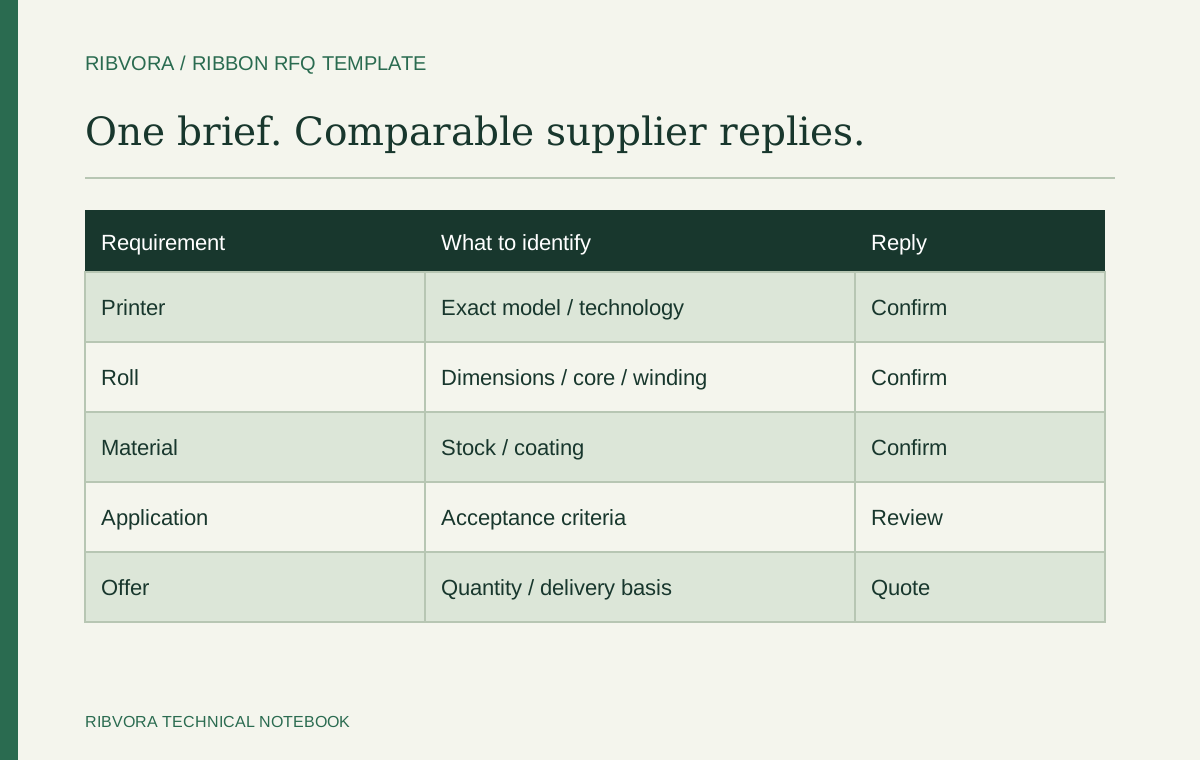
Send the intended item configuration, estimated volume, destination, artwork and required pack information. Mark unknowns openly. Packaging options, minimum quantities, samples and timing are confirmed in a written project offer.