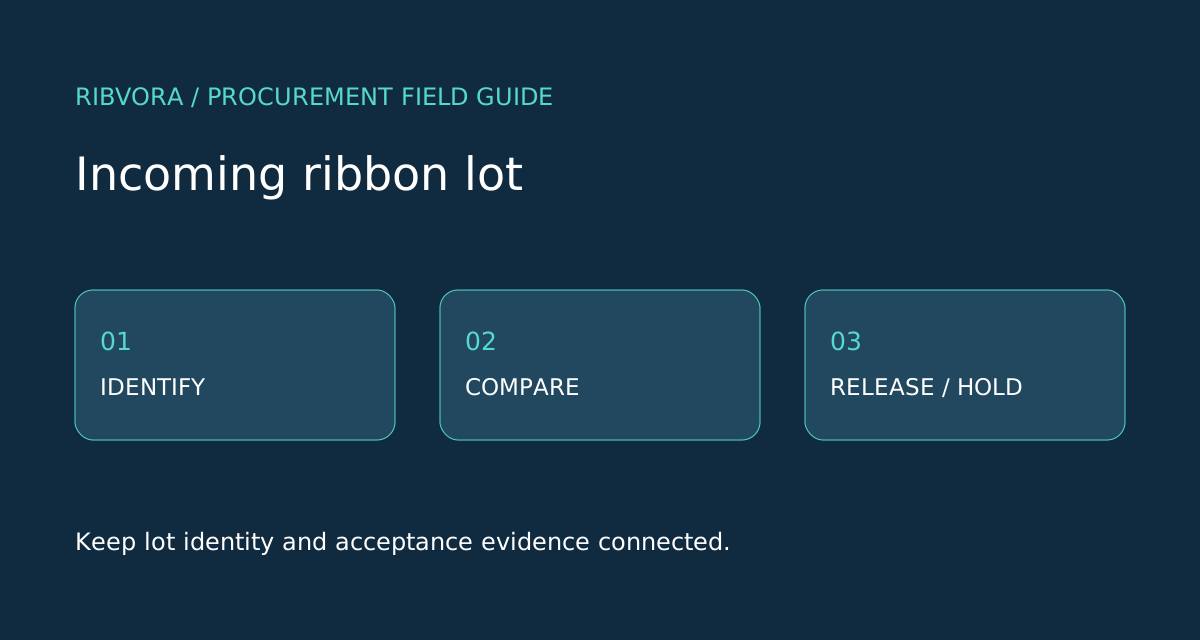
Identify the incoming lot, compare it with the approved order specification, inspect handling damage and run the agreed checks before authorizing that lot for production.
Receiving is a release decision
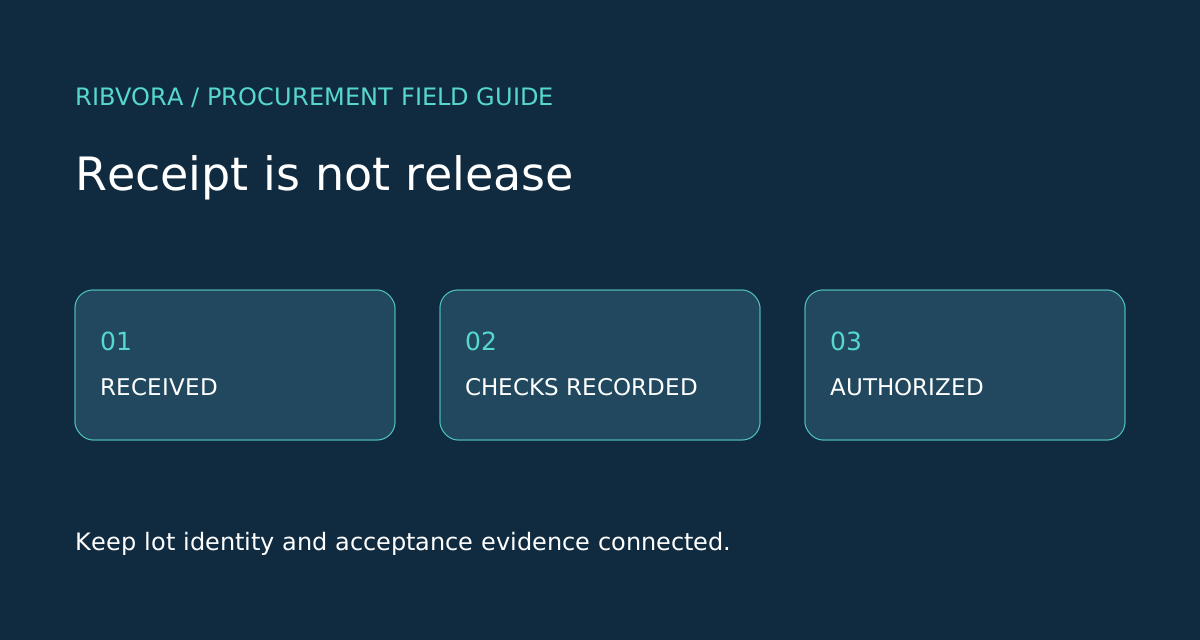
A repeat order can arrive in the right box without being ready for production. Separate physical receipt from release to use. This guide covers incoming lots of an already approved thermal-transfer ribbon; first-time supplier qualification belongs in the sample approval process.
Start with the approved purchase reference
Put the approved formulation reference, dimensions, core configuration and winding beside the purchase order. Use the latest accepted revision. A matching category name such as black resin is not enough to identify the ordered construction.
Keep cartons connected to their lots
Before distributing rolls to production, record the supplier lot identifiers and carton quantities. Photograph the received labels. If several lots arrive together, retain their separate identities rather than assigning one warehouse number that hides the distinction.
Check the delivered configuration
Compare package markings with the purchase reference. Check width, stated length, core and ink-side information using the agreed documents and the printer manual. Do not unwind a full roll to measure length; resolve missing or conflicting declarations with the supplier.
Inspect damage before opening more stock
Photograph crushed cartons, wet packaging or disturbed seals before repacking. Record which cartons are affected and keep suspect stock identifiable. Packaging damage is a reason to investigate, not proof that every roll has failed.
Resolve date and storage questions
Request the exact formulation storage guidance and relevant production or lot date. Do not create a universal use-by period from another brand datasheet. The receipt date does not reset a manufacturer recommendation, and a good-looking package does not establish its storage history.
Choose checks before drawing samples
Agree which lots and cartons will be checked, what constitutes a failure and who decides release. A few convenient rolls from the top carton do not establish a statistically valid acceptance plan. Use the contractual inspection plan where one exists; this article does not prescribe a sample size.
Print against a retained baseline
Use the approved label reference, artwork and printer. Record the current settings and printhead condition. Compare with a retained accepted print where available. If the printer or stock has changed, investigate that change before assigning the difference to the incoming ribbon.
Match the check to the risk
Look at the smallest text, code and image features needed by the job. Where durability is required, apply the agreed exposure procedure and acceptance criteria. A successful handheld scan or an attractive black patch is not a substitute for a required verification grade or end-use test.
Use three explicit dispositions
Release only the identified stock covered by the evidence. Hold stock while a missing document or ambiguous result is resolved. Reject or return only through the agreed commercial process. Keep authority and reason visible so a warehouse receipt cannot silently become technical approval.
| Disposition | Evidence needed | Warehouse action |
|---|---|---|
| Release | Identified lot meets agreed checks | Make only covered stock available |
| Hold | Open document or technical question | Keep stock segregated and identified |
| Reject / return | Decision under agreed terms | Retain evidence and follow agreed instructions |
Preserve the supplier investigation trail
Send the supplier the order reference, received lot, affected quantity, fault photos and controlled comparison record. Retain affected rolls and packaging where practical. Avoid mixing suspect and released stock while the investigation is open; document any later sorting or replacement.
Close the record before the next reorder
Save the receiving decision with the specification and lot record. Use repeated discrepancies to revise the next purchase instruction, not to invent a supplier score from one incident. For a specific incoming-lot question, send the printer model, current-roll label and a redacted photo of the discrepancy through the linked enquiry form.
Further reading & sources
These sources support general technical guidance. Product approval requires evidence for the exact formulation and application.