Electronics and equipment identification
Nameplates and component labels often include fine text, serial references and machine-readable codes. Match the ribbon to the selected face stock and the required exposure conditions.
Industrial parts traceability
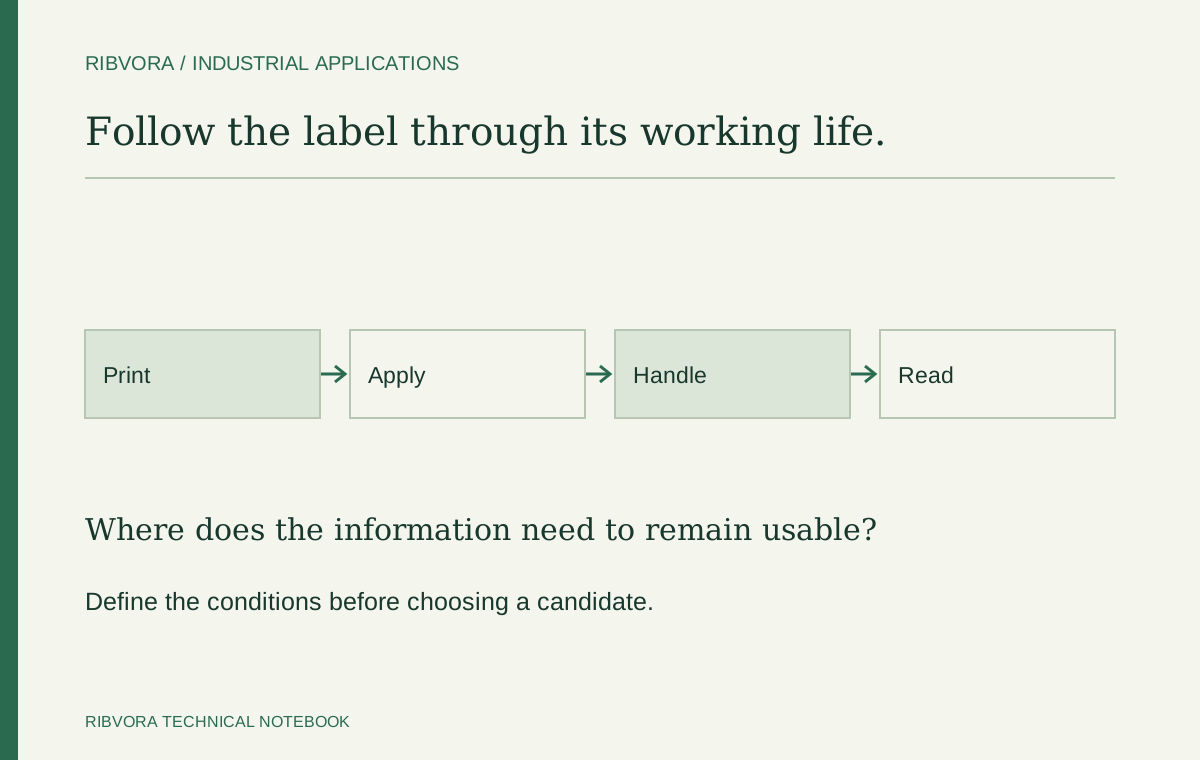
A label may pass through multiple handling stages. Describe the entire workflow, including cleaning or surface contact, when setting the trial criteria.
Projects for label converters
A converter needs to understand both the face stock and the end customer’s equipment. Keep the ribbon specification and the label reference together for testing and future replenishment.
Application-specific evidence
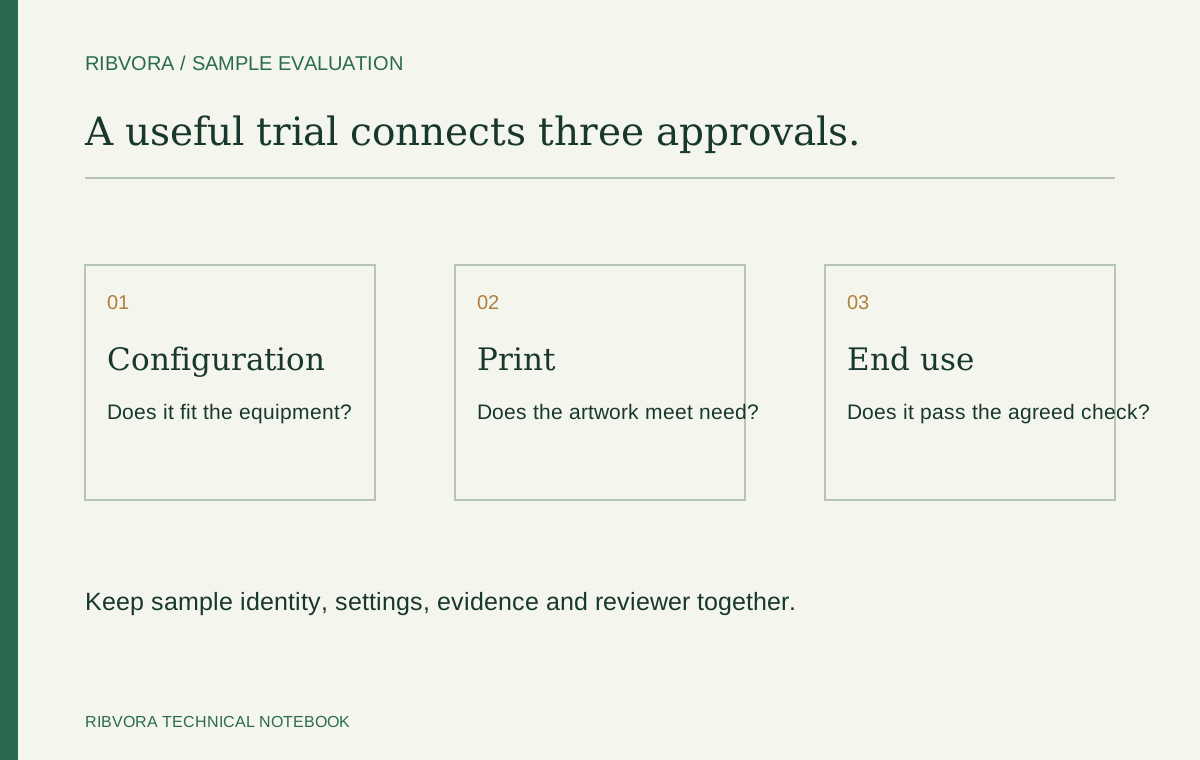
A successful print sample is only the first part of evaluation. Any durability or compliance claim needs a defined scope and supporting evidence for the relevant construction.
Choose the application by its failure consequence
Ask what happens if the information becomes unreadable. A lost picking label, an equipment serial plate and a customer-facing product identifier create different operational problems. Start the enquiry with that consequence and the required information life.
Map the steps after printing
List application, handling, storage, cleaning and scanning. Identify the stage at which damage is observed or expected. The print trial should represent the real process rather than a demonstration on an unrelated label.
Match evidence to the application
Use a named condition and agreed acceptance method for each requirement. A broad durability adjective cannot tell a buyer whether a particular label survives a particular process.
| Application need | Evidence to request |
|---|---|
| Fine identification | Actual artwork and text inspection |
| Code grading | Specified verification method |
| Cleaning exposure | Named process and comparison prints |
| Repeat orders | Approved combination and change record |
Separate the print from the whole label
The ribbon contributes the printed image. Adhesive, base stock, coating and application surface also affect the complete label. Assign each failure to the relevant part before choosing a replacement consumable.
Build one trial before widening the scope
Choose one printer, stock and use case as the first project. Establish a clear outcome and record it. Expanding to another printer or material needs a deliberate review, even if the artwork looks identical.
Keep an operational scan and formal verification distinct
A scan tells you whether the chosen reader decodes under those conditions. If a customer requires a formal grade, use the required verification procedure. Retain the results before and after any relevant exposure.
Use the application to qualify the enquiry
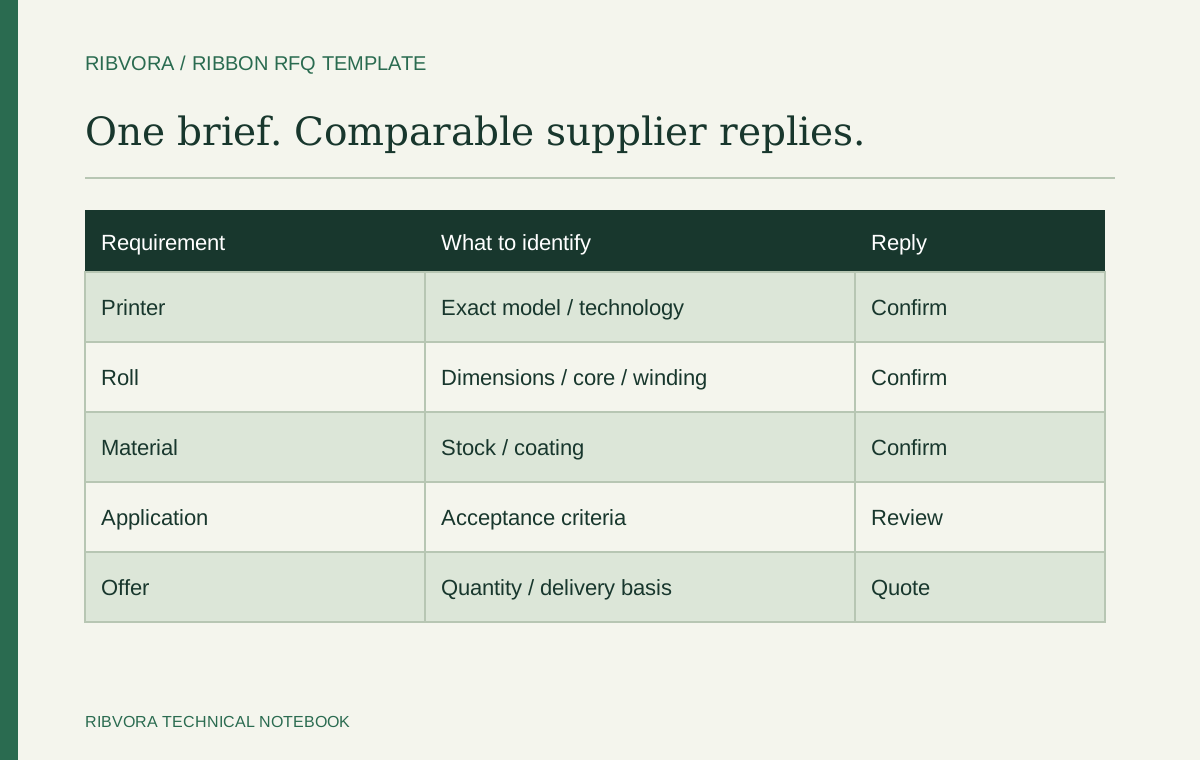
Provide the printer, stock, smallest critical feature, use conditions and expected volume. Unknown dimensions can be resolved later; an undefined requirement makes even a technically complete roll specification hard to evaluate.
Carry the application scope into the purchase record
Record which use was approved and which conditions were not assessed. This helps a distributor avoid extending a successful sample result to a different customer process without checking it.