What a resin ribbon does
A thermal transfer ribbon carries the coating that a heated printhead transfers onto a label. Resin formulations are used where synthetic labels and demanding end-use conditions call for more than a basic paper-label print.
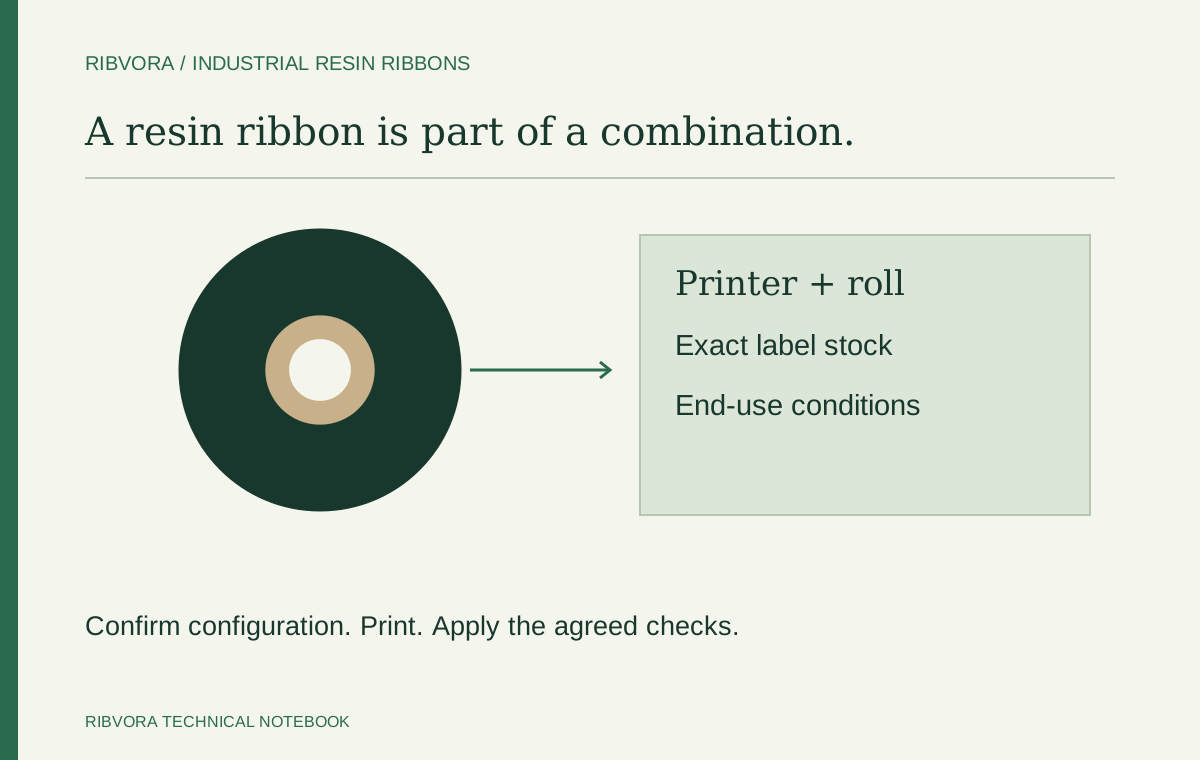
Performance comes from the complete combination: ribbon formulation, label coating, printer settings and the conditions the label will face. “Resin” alone is not a complete performance specification.
Start with a focused application
For an initial enquiry, identify one actual use case rather than a general request for the best resin. An equipment identification label and a frequently handled parts label may have different acceptance criteria.
- Electronics and equipment nameplates
- Component and assembly identification
- Industrial parts traceability
- Converter projects using specified synthetic face stocks
Configure the roll correctly
A candidate formulation must also fit the printer. Use the printer manual and current ribbon specification to confirm the mechanical configuration. Do not substitute a flat-head and near-edge formulation without verification.
| Specification | What to confirm |
|---|---|
| Printer | Exact model, resolution and printhead technology |
| Ribbon roll | Width, length and maximum outside diameter |
| Core | Inside diameter, core length, notches or other requirements |
| Winding | Ink side in / out and any leader or trailer requirements |
| Material | Face stock supplier, reference and surface finish |
Evaluate on the actual label
Use the intended label material for the trial. Record speed, darkness / energy settings and printhead condition. Include the smallest text and most demanding barcode in the test design.
Agree any exposure protocol and pass criteria before testing. Results on a supplier demonstration label do not establish performance on a different stock.
Plan for bulk procurement
Share the estimated quantity per specification, destination and required packaging. Sample availability, MOQ, lead time, price and commercial terms are confirmed in the quotation.
For repeat orders, retain the approved reference and test record. Agree how any formulation, material or configuration change will be communicated before production.
Technical documentation
Ask for the datasheet and relevant safety or compliance documentation for the proposed formulation. Where a requirement concerns the complete printed label, establish the scope of the ribbon-and-label combination.
RIBVORA does not publish unverified model compatibility, resistance limits or certifications as product facts. Request a specification review for your intended application.
Resin, wax-resin or a different print method?
First confirm that the equipment uses thermal transfer. Then compare the required result, not a category hierarchy. A coated paper job with moderate handling and a synthetic equipment label exposed to a named cleaner may need different candidates.
| Starting question | Why it changes the shortlist |
|---|---|
| Does the printer use ribbon? | Direct thermal needs no ribbon |
| What is the exact label coating? | The surface affects ink transfer |
| What must the information survive? | Exposure defines the evaluation |
An existing roll is evidence, not the complete brief
Keep the old box label and photograph both core ends. Connect that reference to the printer and label stock actually in use. If the old ribbon is failing, describe where and when; matching the previous roll is not necessarily the right objective.
Separate three different approvals
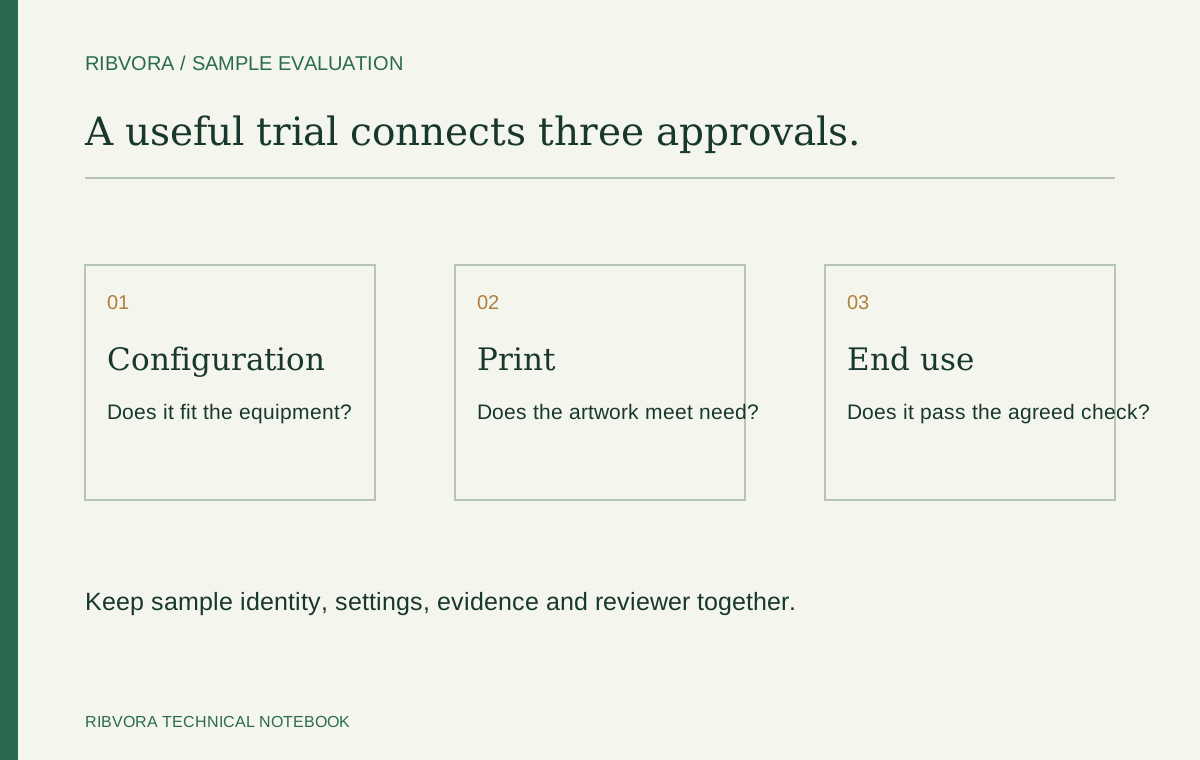
Confirm mechanical fit, acceptable printing and end-use performance separately. A roll that loads correctly can still print poorly; a clear barcode at the printer can still become unreadable later.
- Mechanical: model, dimensions, core and winding.
- Print: production artwork on the actual coating.
- End use: agreed handling or exposure checks.
Compare offers without losing the configuration
Ask every supplier to identify the proposed formulation and complete roll. Place currency, quantity break, packaging and delivery basis beside the price. A lower number for an unidentified substitute is not yet a comparable offer.
Turn one successful trial into a repeat-order reference
Keep the approved ribbon and stock references together with the tested settings. Purchasing should be able to identify the accepted configuration without reopening a technical email chain. Record who reviews any future substitution.
Choose the shortest useful next step
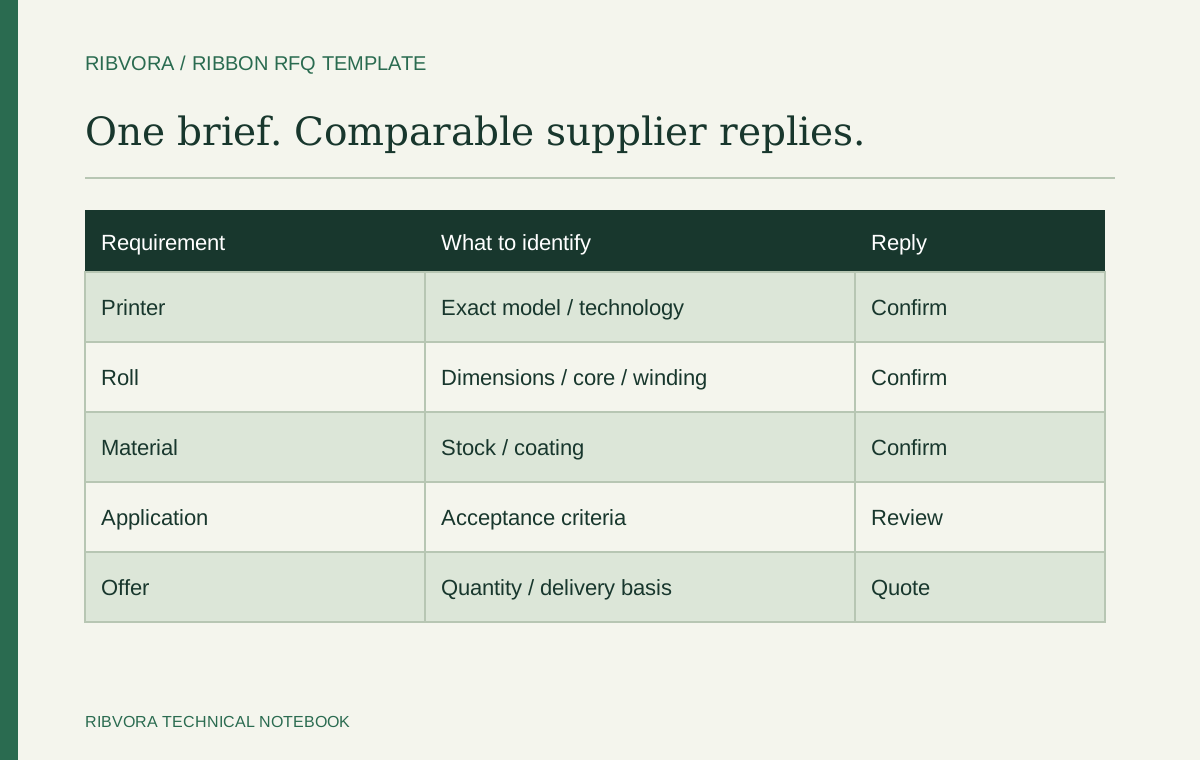
If you know the specification, use the RFQ template. If dimensions are uncertain, build a brief and mark the unknowns. If a print is failing, send the printer model, stock reference and a clear defect photo rather than a general request for a stronger resin.
Common questions
Can you quote from my existing ribbon part number?
A current part number helps. Include the printer model, label material and quantity, so the proposed configuration can be reviewed rather than assumed equivalent.
Do you offer all sizes?
Send the dimensions you need. Availability, minimum quantities and lead times are confirmed after the specification is reviewed.
Further reading & sources
These sources support general technical guidance. Product approval requires evidence for the exact formulation and application.