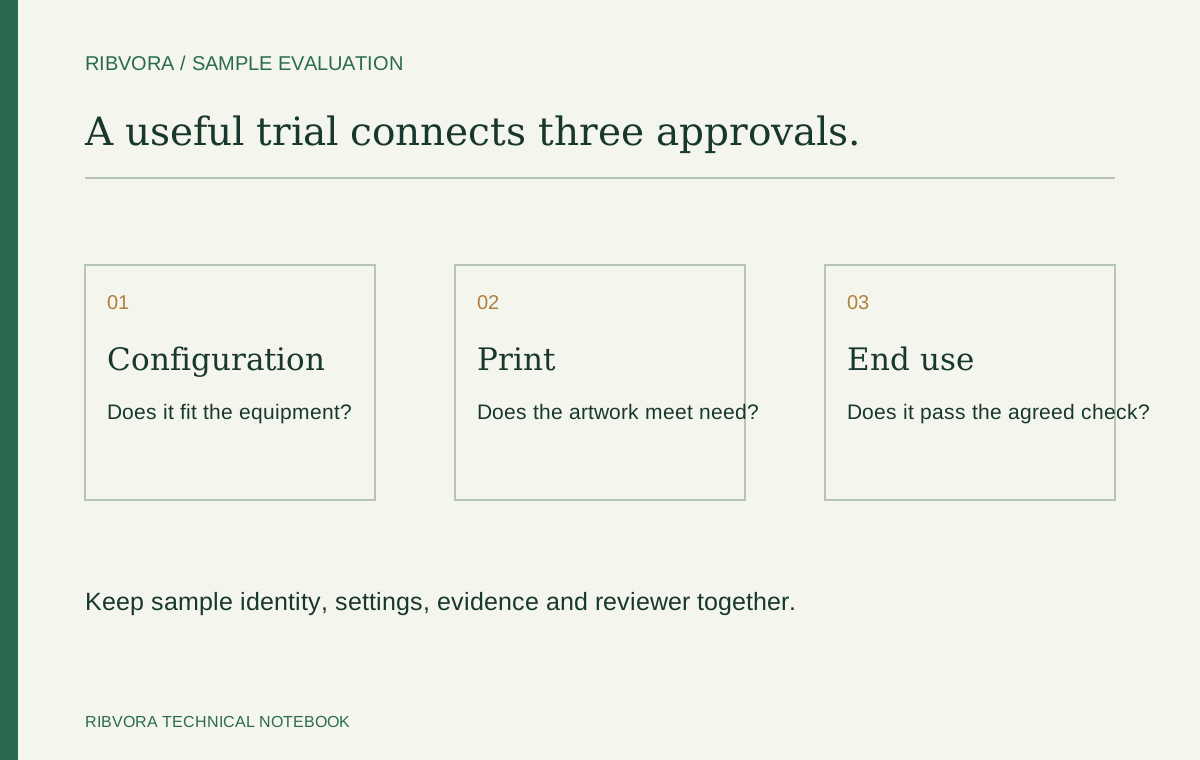
1. Confirm the configuration
Check width, length, core, winding direction and printer requirements. Inspect the supplied sample identification so the trial can be connected to the intended production formulation.
2. Record the print setup
Use the actual label stock and printer intended for the job. Record the material reference, print resolution, speed, darkness / energy settings and any relevant maintenance condition.
3. Inspect the printed result
Evaluate fine text, edge definition, print density and code readability. Identify an appropriate barcode verification method where a formal grade is required.
| Check | Record |
|---|---|
| Fine text and graphics | Artwork, magnification or inspection method and observed defects |
| Code readability | Code format, dimensions, reader or verifier and acceptance requirement |
| Coverage and transfer | Voids, uneven density, smudging or incomplete transfer |
| Repeatability | Number of samples, run conditions and any variation |
4. Test the intended exposure
Define contact materials, chemical concentration, temperature, duration and abrasion protocol where applicable. A broad claim of resistance without test conditions is not enough to approve an application.
For regulated or certification-dependent uses, the necessary evidence may involve the complete label construction. Confirm scope with the relevant supplier or qualified assessor.
5. Connect approval to the order
Record the accepted formulation, configuration, material and test conditions in one approval reference. Keep a retained sample where appropriate and establish how changes will be communicated.
Documents for the exact product
Request product datasheets and any relevant safety or compliance documents for the proposed formulation. The availability and scope of documents must be checked for your project.
This framework describes how to plan an evaluation. It is not a claim that RIBVORA products hold a specific certification or have passed a specific resistance test.
Use a trial matrix the whole team can review
Before printing, agree the required checks with the people who will accept the result. Use the downloadable worksheet to keep the comparison sample, exposure record and decision together. Do not invent universal temperatures, chemical concentrations or barcode grades.
| Stage | Record before the trial | Record after the trial |
|---|---|---|
| Identification | Candidate reference, batch and roll configuration | Correct sample received; deviations noted |
| Print setup | Printer, resolution, stock reference, speed and darkness | Actual settings and maintenance observations |
| Print quality | Artwork revision and agreed critical features | Fine text, voids, density and code results |
| End use | Named exposure, method and acceptance criteria | Observed change and pass/fail evidence |
| Decision | Reviewer and scope of approval | Approved, rejected or conditional; date and limits |
A failed trial needs a defined next step
Keep a failed label and an untouched comparison print. Record the fault before changing settings. Follow the printer’s guidance and change one relevant variable at a time so the cause remains traceable.
If the material coating, formulation or equipment changes, review which checks must be repeated. A conditional approval should say what is still unresolved and which uses are excluded.
Freeze the approved combination for replenishment
Use one approval reference that identifies the formulation, full roll configuration, label stock and relevant settings. Retain the evidence and agreed change-notification process with the purchase record.
Use the worksheet as a purchasing record, not as a supplier test certificate. Product-specific claims require the corresponding evidence for the exact scope.
Agree the acceptance decision before opening the sample
State who can approve, reject or request a retest. Separate essential requirements from observations that would merely be useful. A trial with no agreed acceptance requirement can produce attractive prints without a purchasing decision.
Keep the evidence easy to find
Use a single record containing the sample identifier, stock, settings, artwork, photos and test results. Name each file with the trial reference. A later reviewer should be able to reconstruct what was assessed without relying on memory.
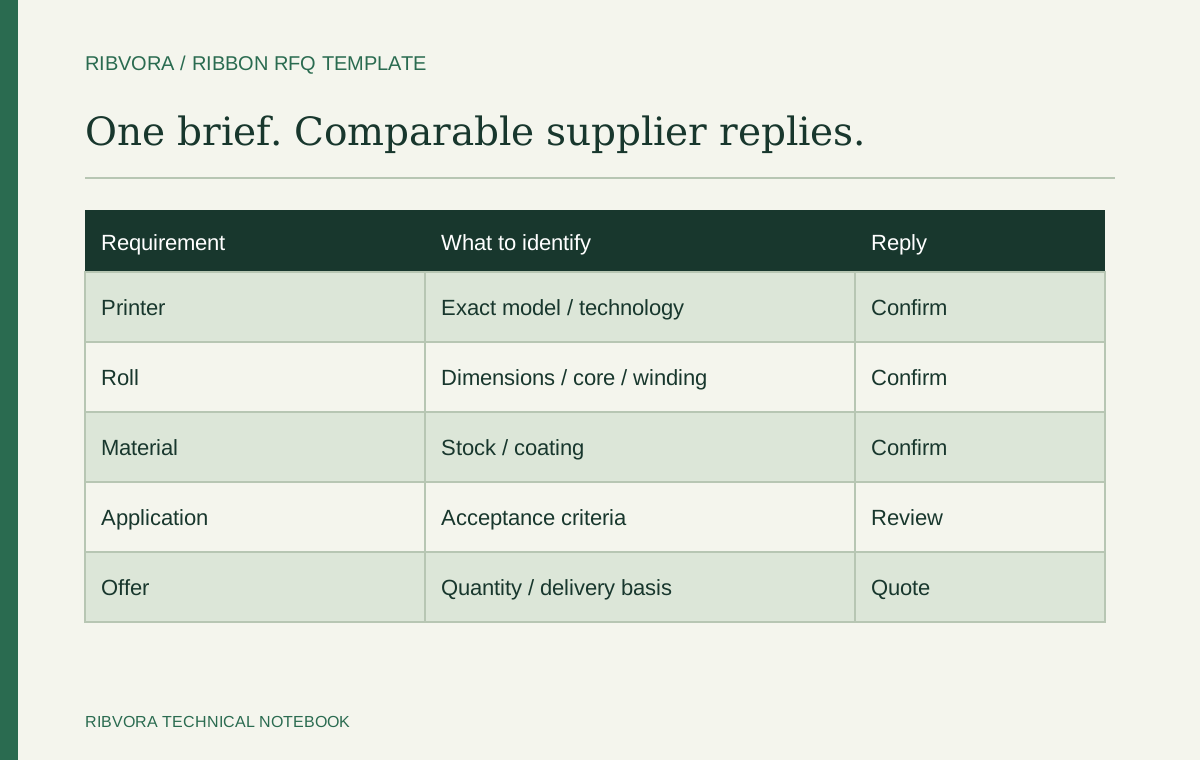
Compare cost only after the relevant approval
Once candidates meet the required scope, compare measured accepted output and a common quotation basis. Keep any extra testing, label waste or downtime separate from ribbon-only arithmetic rather than hiding them in a claimed saving.
Further reading & sources
These sources support general technical guidance. Product approval requires evidence for the exact formulation and application.