Why PET labels are considered
Polyester face stocks are commonly considered for industrial identification such as equipment labels and nameplates. Resin ribbon suppliers identify synthetic materials, including polyester, among their intended substrates.
The suitability of a complete label also depends on the adhesive, surface coating, application surface and environmental conditions. Ribbon selection addresses the print, not every component of the label construction.
Gloss and matte are not interchangeable
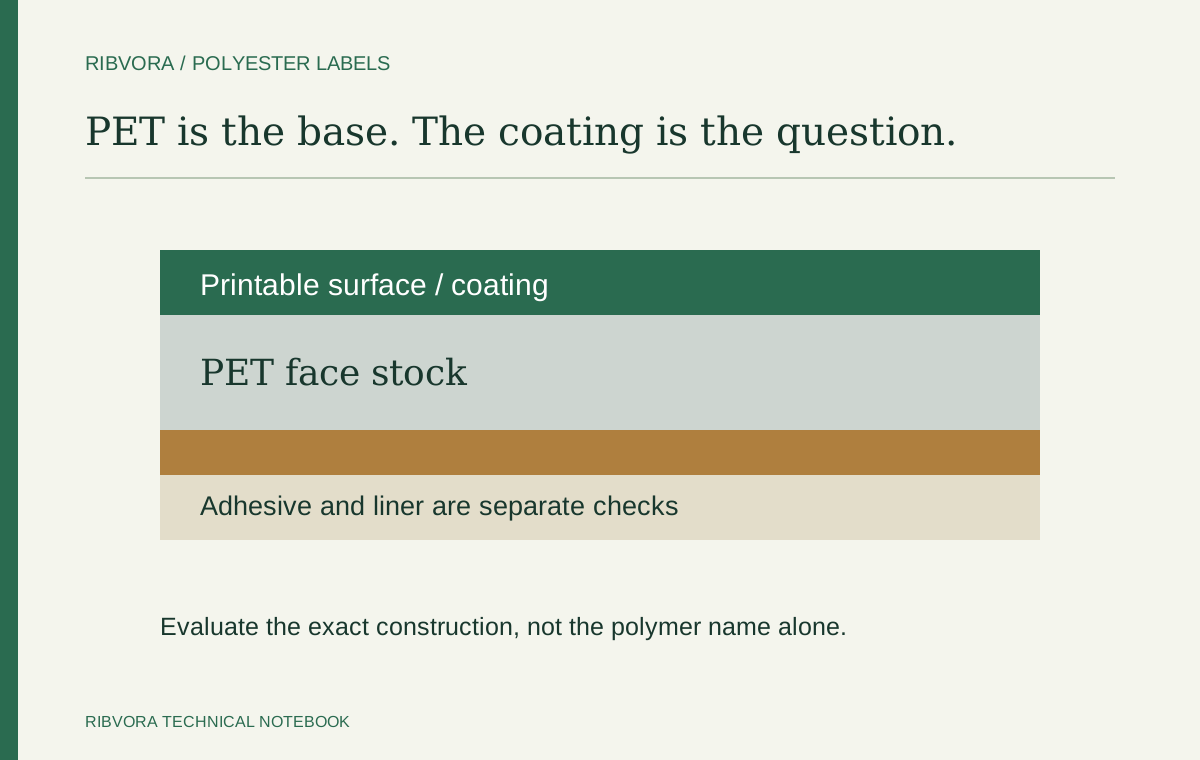
Different PET top coatings can produce different print results with the same ribbon. Record the material manufacturer and product reference, rather than describing the stock only as white PET or silver PET.
- Face stock and top-coating reference
- Matte, gloss or other specified surface finish
- Label dimensions and minimum text / barcode size
- Expected handling, cleaning and service environment
Build a meaningful trial
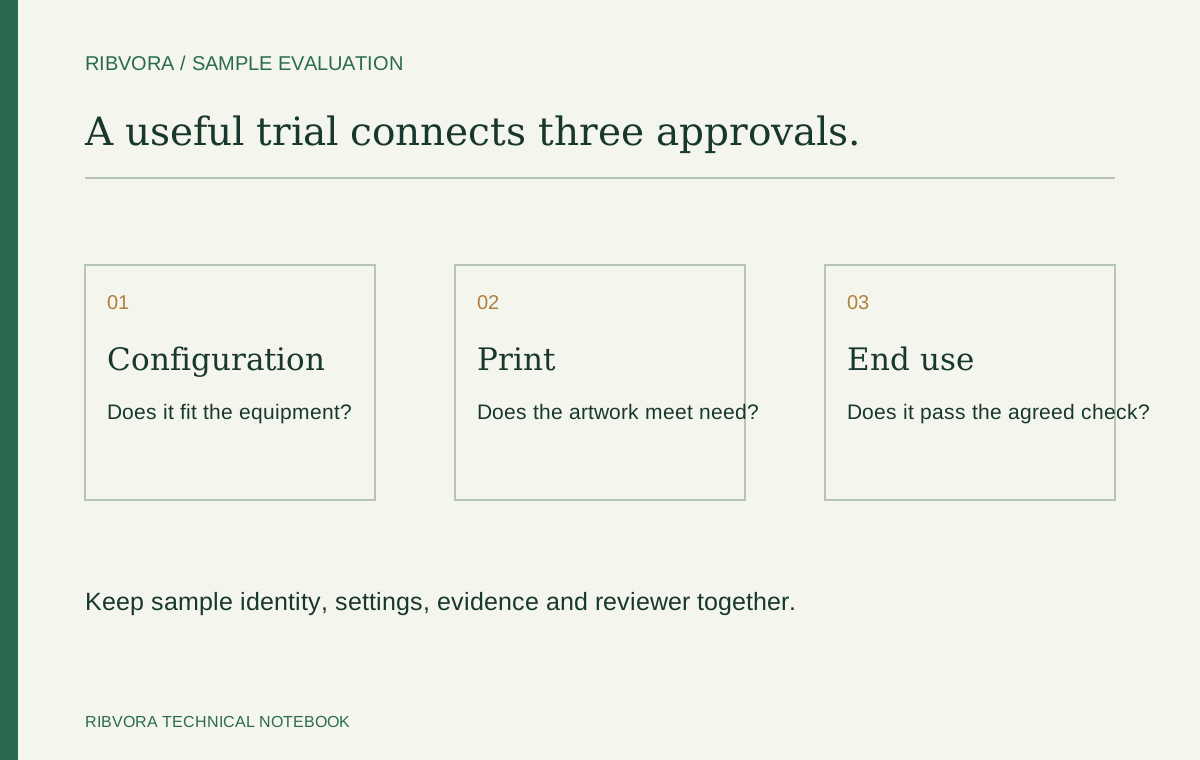
Print on production stock with the intended equipment. Inspect edge definition, density, fine text and readability. Record settings so the result can be repeated.
Where resistance is important, identify the actual chemical, contact conditions, temperature and acceptance criteria. Generic claims such as chemical resistant are not a substitute for an application test.
What to send for matching
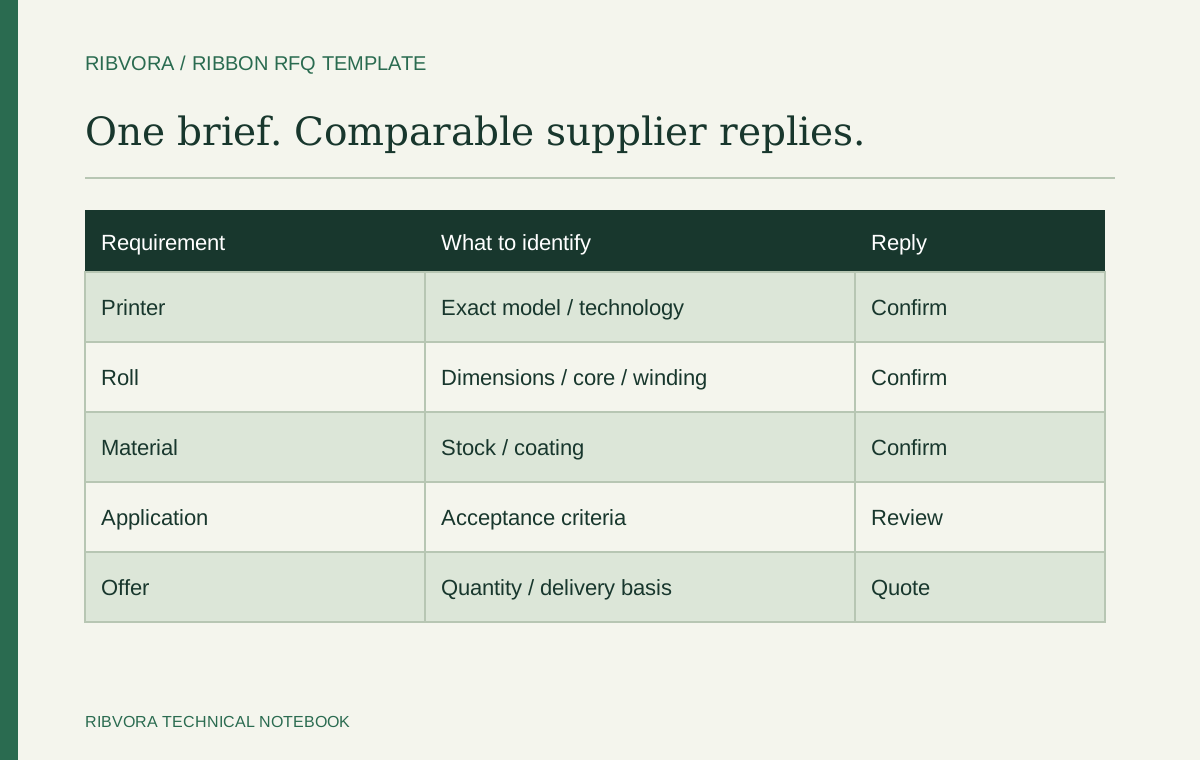
Provide the printer model, current ribbon reference, PET label datasheet and estimated order volume. If you are replacing an existing ribbon, explain what should improve and what must remain equivalent.
Approval and repeat ordering
Retain both the approved ribbon reference and the exact label stock. If the top coating or supplier changes, repeat the relevant evaluation before assuming the original result still applies.
Read the stock reference before judging the ribbon
A PET film name describes the base material, not the printable surface. Ask whether the supplied stock is intended for thermal transfer and identify its coating reference. Treat an uncoated film and a specified coated label as different starting points.
Silver and white labels can hide different surfaces
Colour alone does not identify a coating. When a metallic-looking stock prints differently from a white stock, compare supplier references, finish and intended printing process before changing the ribbon category.
Use the smallest production feature in the trial
A large black block may look convincing while a small serial number breaks up. Include the actual text sizes, dense codes and artwork revision. Establish which details must remain readable after the defined exposure.
Keep adhesive and print failures separate
If the label lifts from an enclosure, investigate the label construction, surface preparation and adhesive requirement. If the print smears while the stock stays attached, investigate the printed combination. A ribbon change does not answer both problems.
A comparison plan for a proposed substitute
Use one production stock batch, one artwork and the intended printer. Record appropriate settings for each candidate and compare against the same acceptance requirement.
| Hold consistent | Record for each candidate |
|---|---|
| Stock and artwork | Exact references |
| Required outcome | Print and exposure observations |
| Measurement boundary | Setup loss and accepted output |
What makes a PET enquiry actionable
Attach the label datasheet or stock identification, printer model and current ribbon reference. Name any cleaner and the actual contact process. “Oil resistant” without a defined oil or exposure leaves the supplier guessing.
Review the combination after a stock change
Keep a retained approved print where practical. If the coating, stock supplier, artwork or printer changes, review the relevant trial rather than assuming that “still PET” preserves the original result.
Further reading & sources
These sources support general technical guidance. Product approval requires evidence for the exact formulation and application.