UL 969 Ribbon Substitution: What Evidence Must Match?
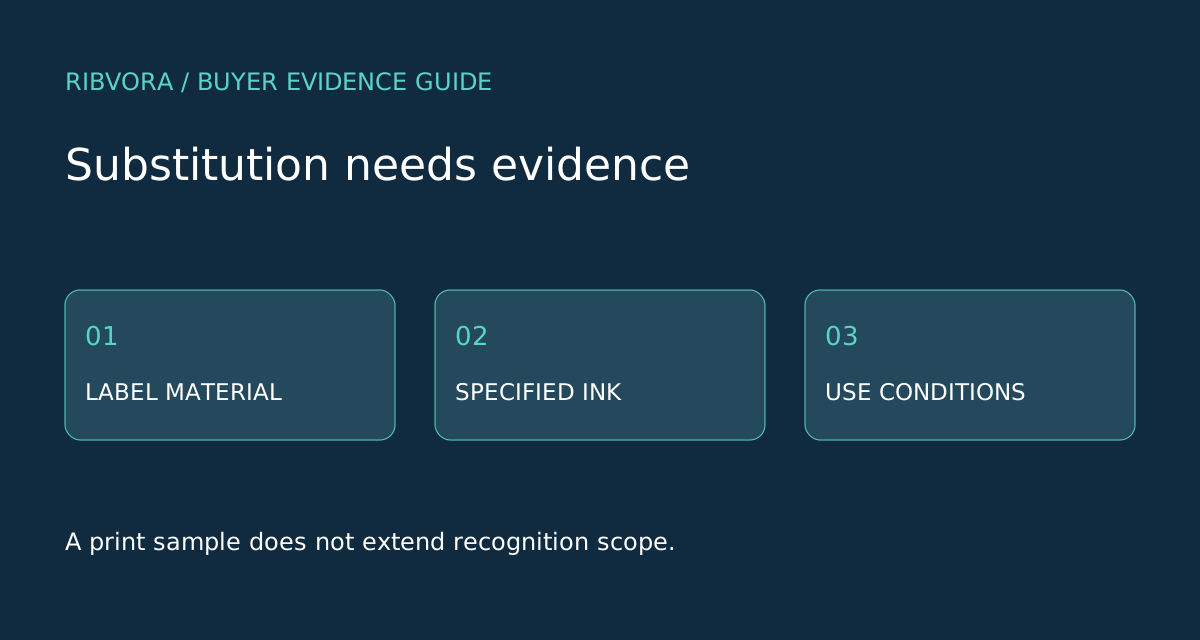
A good print sample cannot establish that a replacement ribbon is covered by the label system recognition. Keep the documented construction and application trial connected.
Read article ↗Specification guides, material insights and practical buying advice for label converters and distributors.
The useful comparison is the cost and reliability of an approved configuration. Start with one application and make the evidence comparable.
Read the buying checklist ↗13 articles
A good print sample cannot establish that a replacement ribbon is covered by the label system recognition. Keep the documented construction and application trial connected.
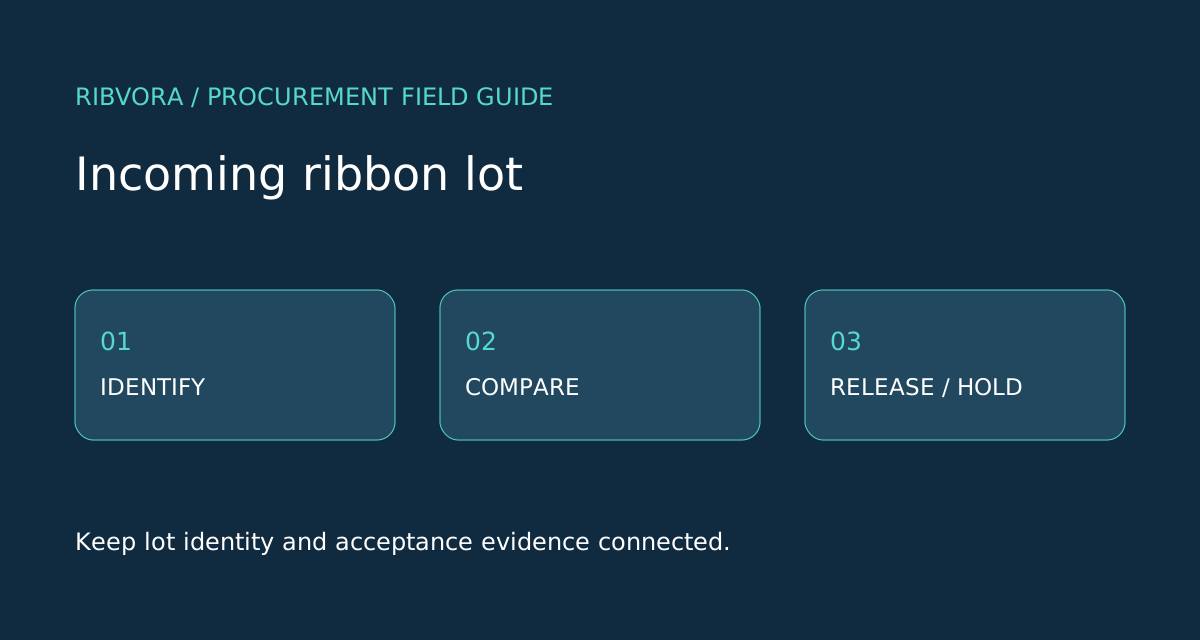
Read article ↗Received is not released. Keep the lot identity, approved specification and acceptance evidence together before a repeat ribbon order reaches production.
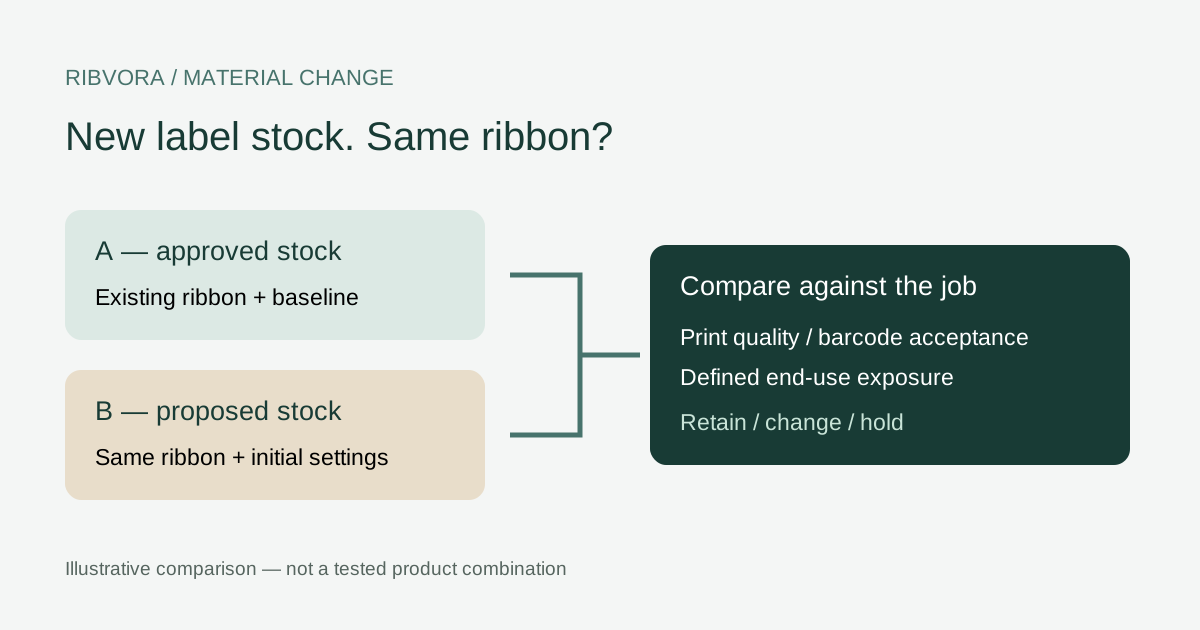
Read article ↗The same ribbon is a candidate, not an automatic approval, when the printable label surface changes. Compare the old and new combinations before releasing the next order.
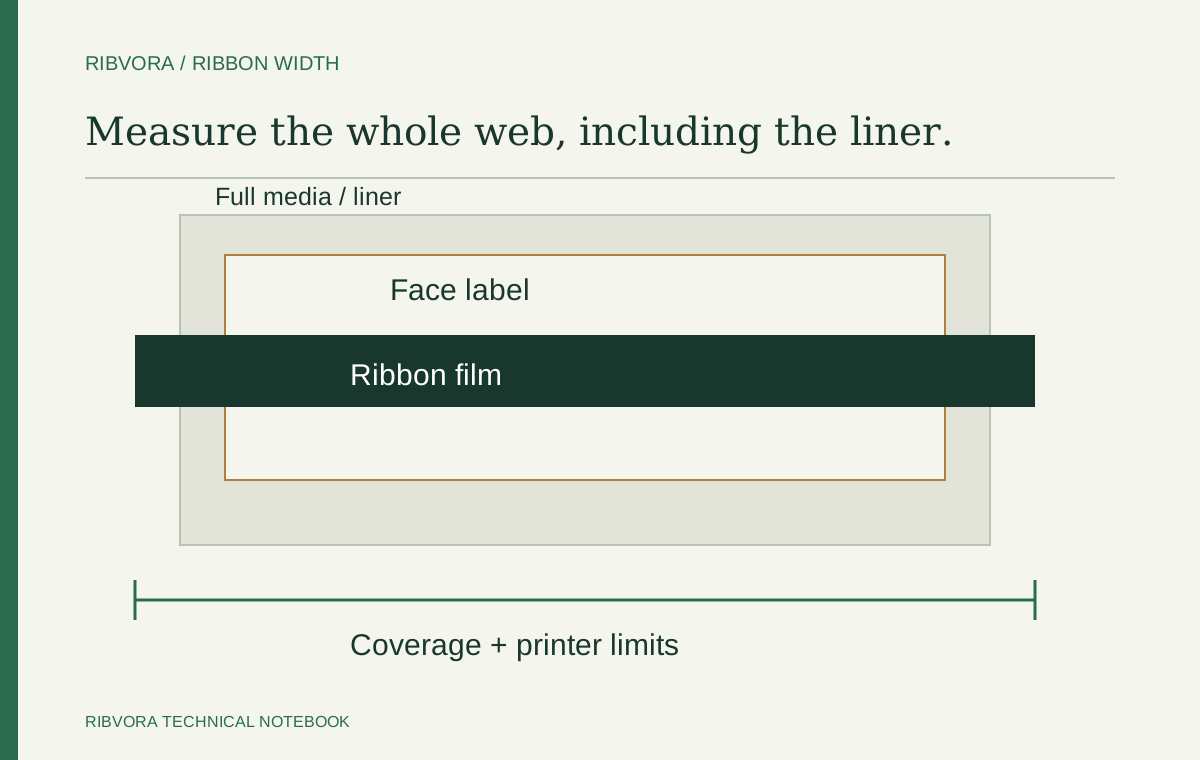
Read article ↗The label is 50 mm wide. Does that make a 50 mm ribbon the right order? Measure the backing before deciding.
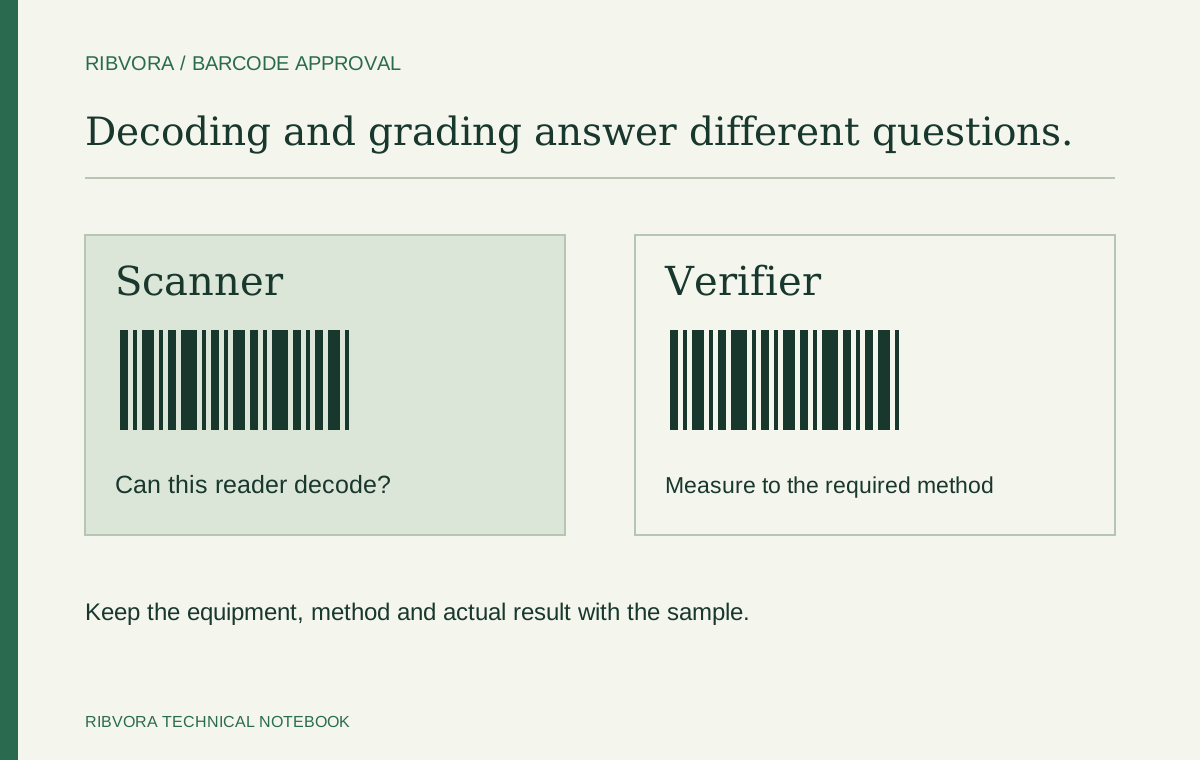
Read article ↗The sample scans at your desk. Before signing it off, check whether that answers the customer’s acceptance requirement.
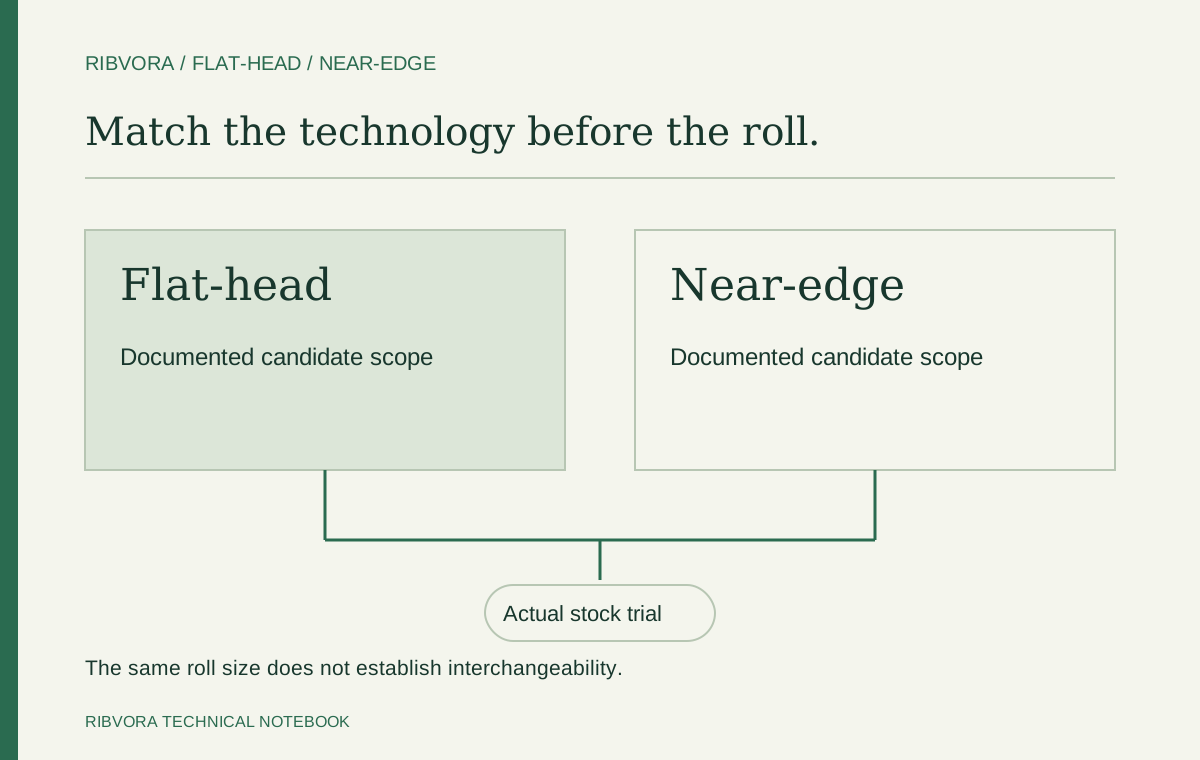
Read article ↗The replacement roll fits the spindle. That answers one question, but leaves the formulation question open. Check the printer technology before approving the order.
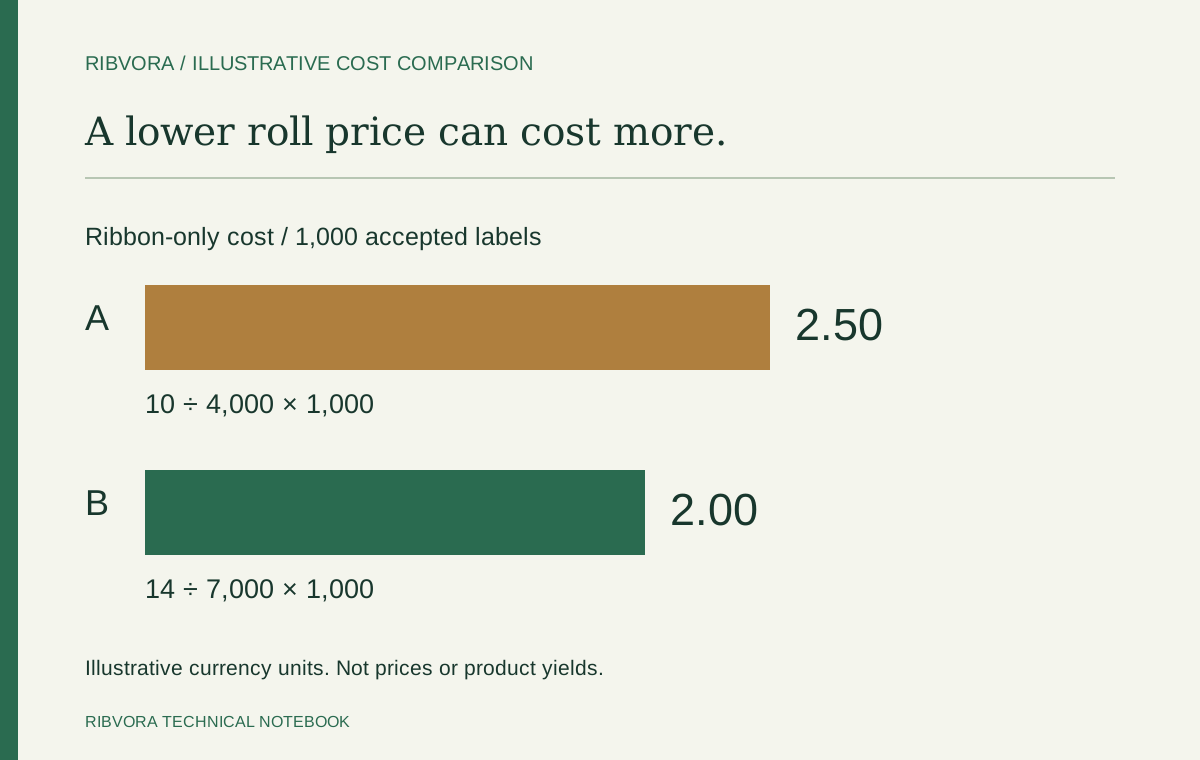
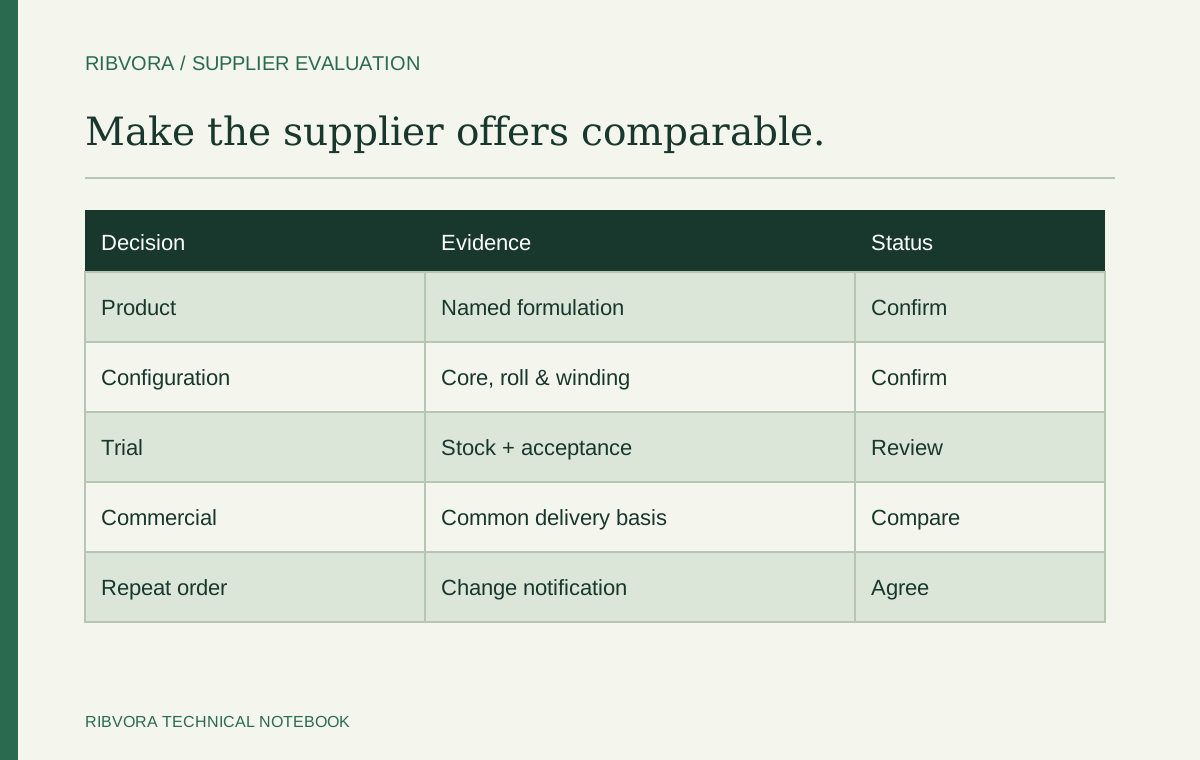
Read article ↗A cheaper roll is useful only if it produces the output you can actually use. Put both quotations on the same basis before choosing a supplier.
Read article ↗The useful comparison is the cost and reliability of an approved configuration. Start with one application and make the evidence comparable.
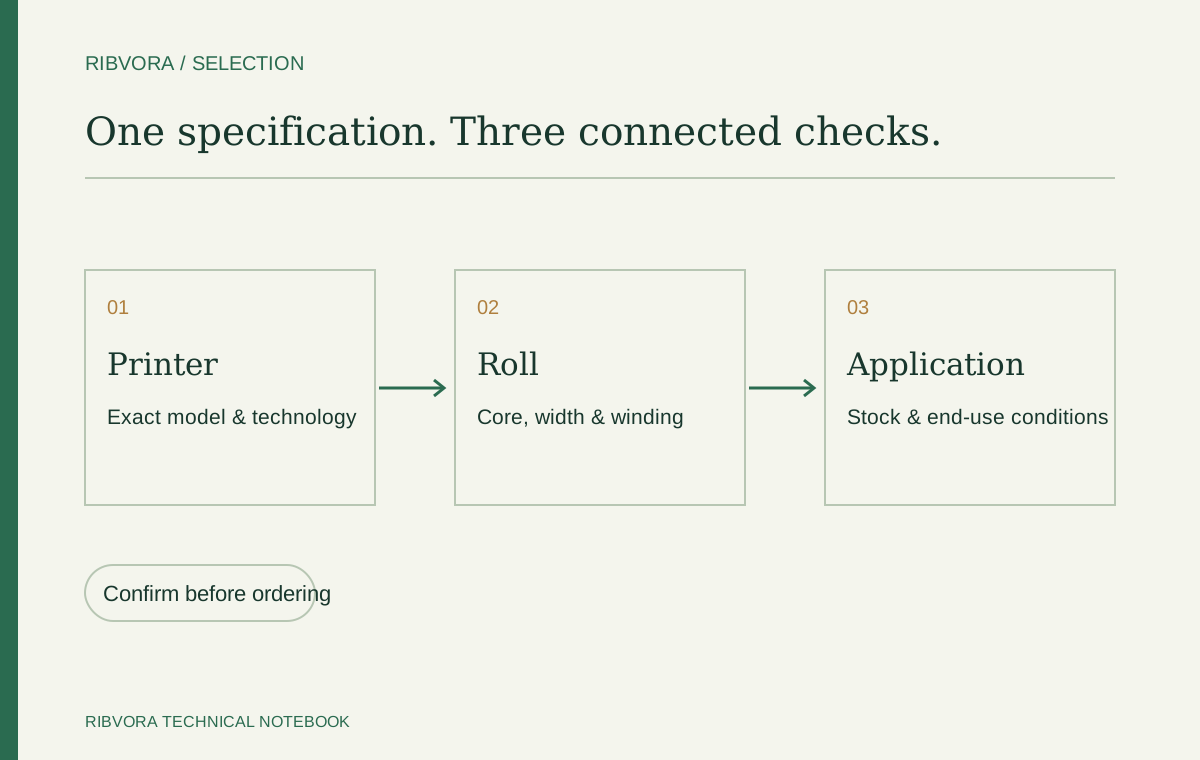
Read article ↗The shortest useful specification connects the printer, roll, material and end use.
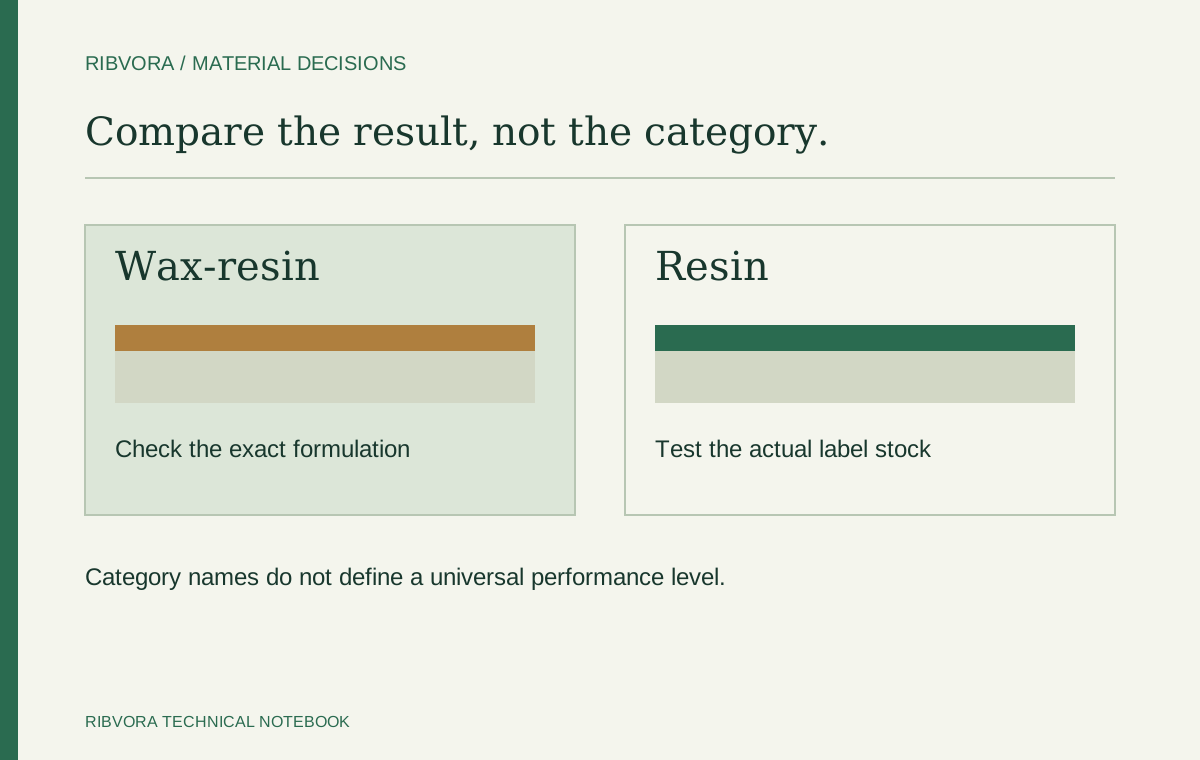
Read article ↗Choose the formulation that meets the application. The category name is only the beginning.
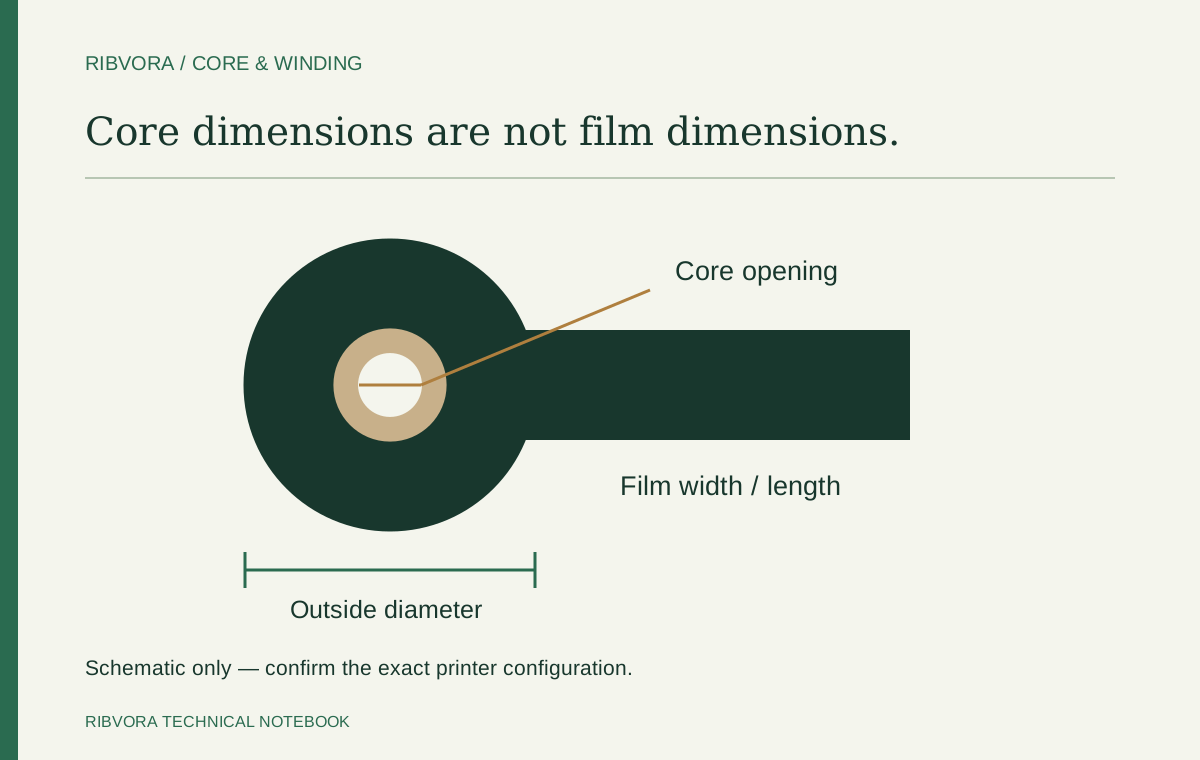
Read article ↗A roll can look right and still be wrong for the printer. Confirm the core, winding and complete roll configuration before purchasing.
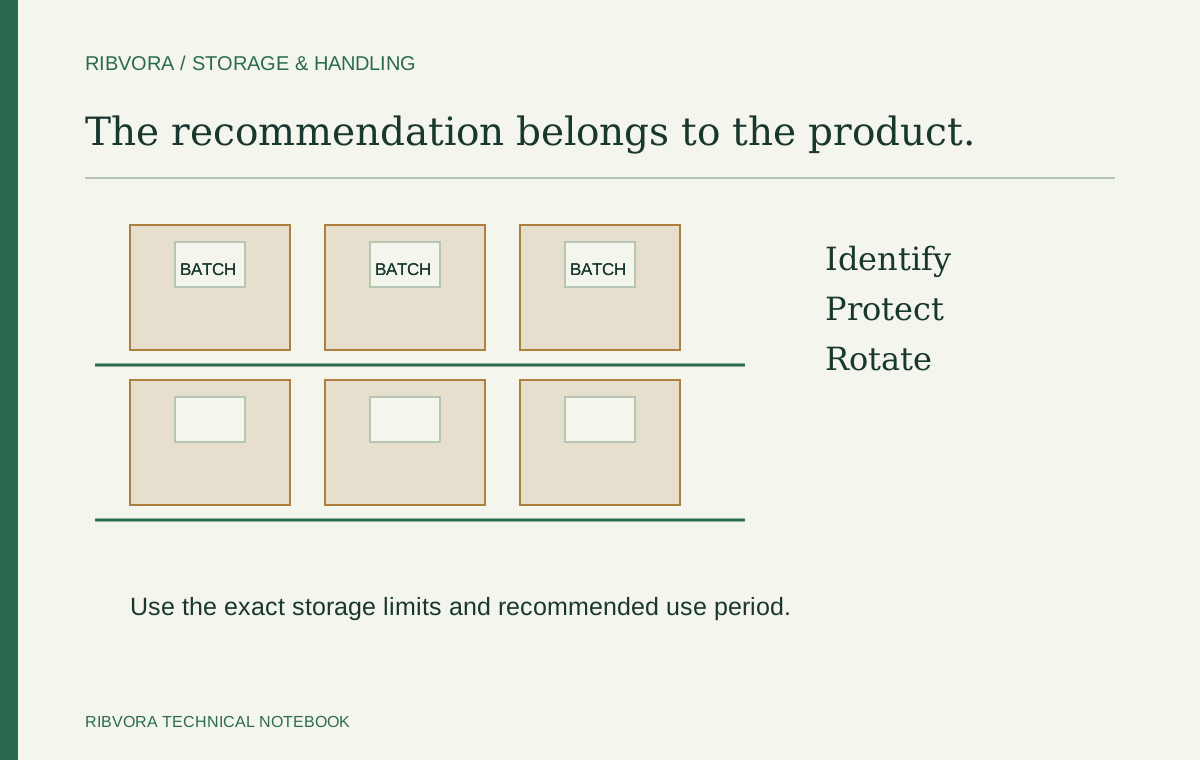
Read article ↗Storage guidance belongs to the exact product. Keep the supplier’s instructions with your inventory and approved specification.
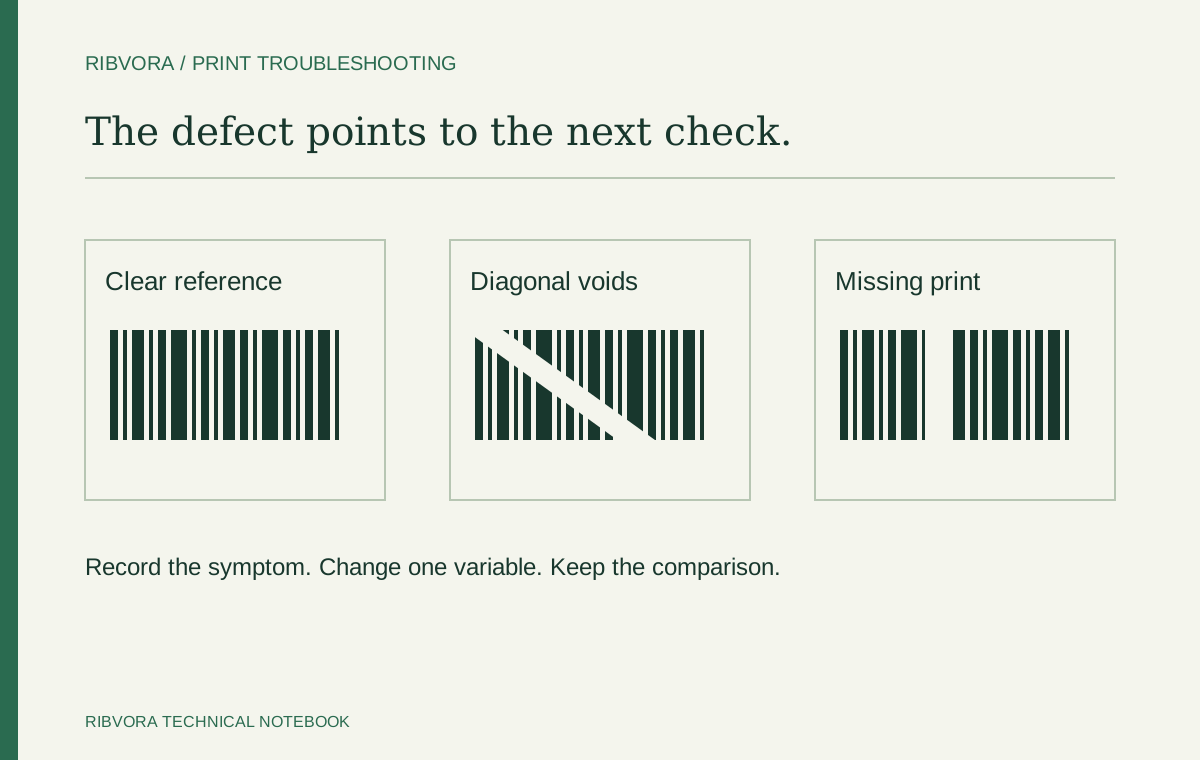
Read article ↗Change one variable at a time. Keep the material, printer setup and observed defect in the same record.
Read article ↗Turn what you know into a brief: printer, material, dimensions and use conditions. Unknown details are fine.
Build my specification briefIf you have a printer or an old roll but not the complete configuration, open the selection and core guides. Then use the specification finder to separate known details from those awaiting confirmation.
Use the PET and PP guides with the stock supplier reference and coating. A general material article cannot approve a formulation on a different surface. Keep the intended artwork and application in the trial.
The troubleshooting guide helps organize loading, settings and material questions. Record the failed print and change one variable at a time. Follow equipment instructions before mechanical adjustments.
Use the supplier checklist and RFQ template together. Confirm that formulation, configuration, quantity and delivery basis agree before comparing the price. Identify unanswered lines instead of assuming equivalence.
A reader decode and formal verification answer different questions. Use the method required for your application and retain actual results. Assess relevant exposure effects before releasing a printed combination.
The cost guide and calculator keep the numerator and denominator on the same boundary. They do not supply prices or predict yields. Label examples and estimates clearly before using the result in purchasing.
Follow the linked primary documentation and check the product reference, intended stock and test conditions. A statement about another formulation does not establish the performance of your proposed combination. Keep the relevant document and revision with the purchasing decision.