For label converters
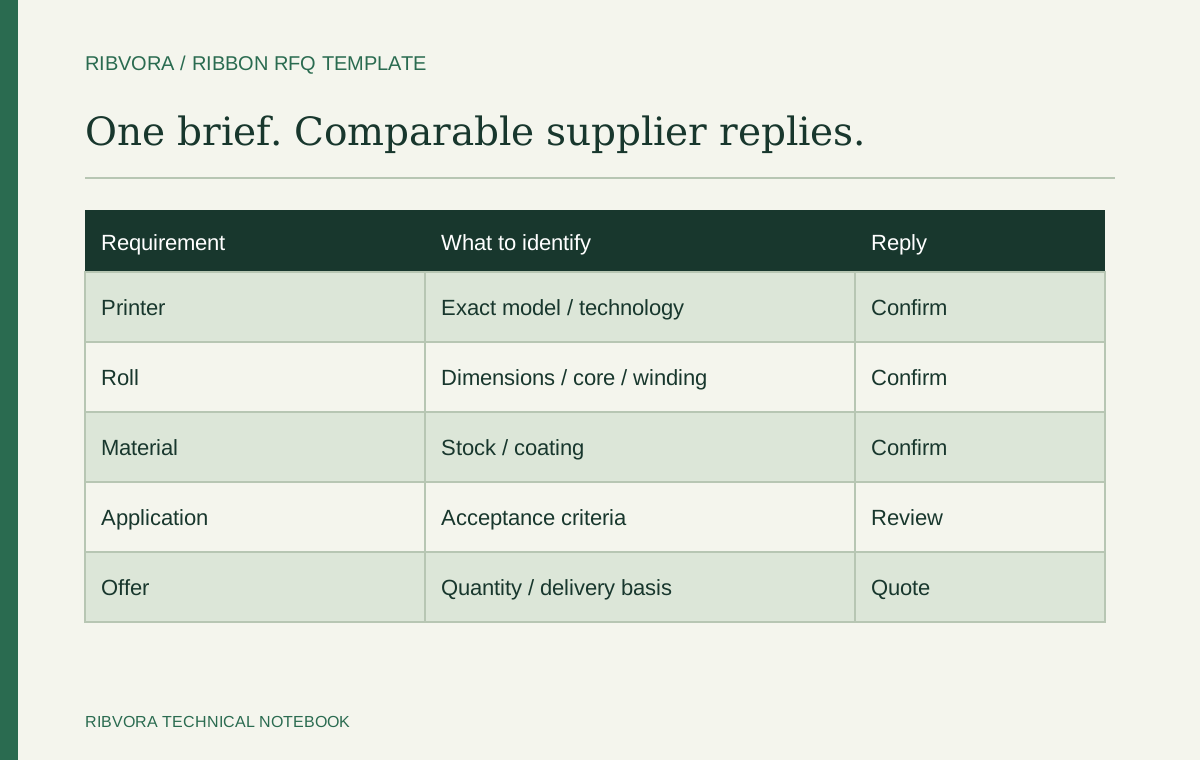
Connect your label stock knowledge with the end customer’s printer requirements. Provide the stock reference and the intended use so the sample review addresses the combination your customer will actually use.
For barcode and printer supply distributors
Identify an existing consumable specification, its estimated recurring volume and what you need from an additional supply option. This creates a focused starting point for evaluation.
A practical first project
Begin with one configuration and one material. Confirm sample availability and review the commercial case before expanding the range.
- Current printer and ribbon reference
- Label stock and end-use requirements
- Order quantities and estimated replenishment frequency
- Target destination, packaging and documentation needs
Private-label enquiries
Share the intended brand presentation and packaging requirements. Discuss minimum quantities, artwork approval, batch identification and the information needed on each roll or carton.
Territory, exclusivity or customer protection arrangements require a separate written agreement. An enquiry does not establish such terms.
Plan repeat orders clearly
A repeat order should reference the approved configuration, not a general category description. Agree the process for reporting changes, handling quality issues and reviewing the next requirement.
Commercial terms are project-specific
MOQ, availability, production timing, shipping terms and payment terms are confirmed in a written quotation. Provide the delivery destination and the requested order size so these can be reviewed together.
Choose a first project with a clear owner
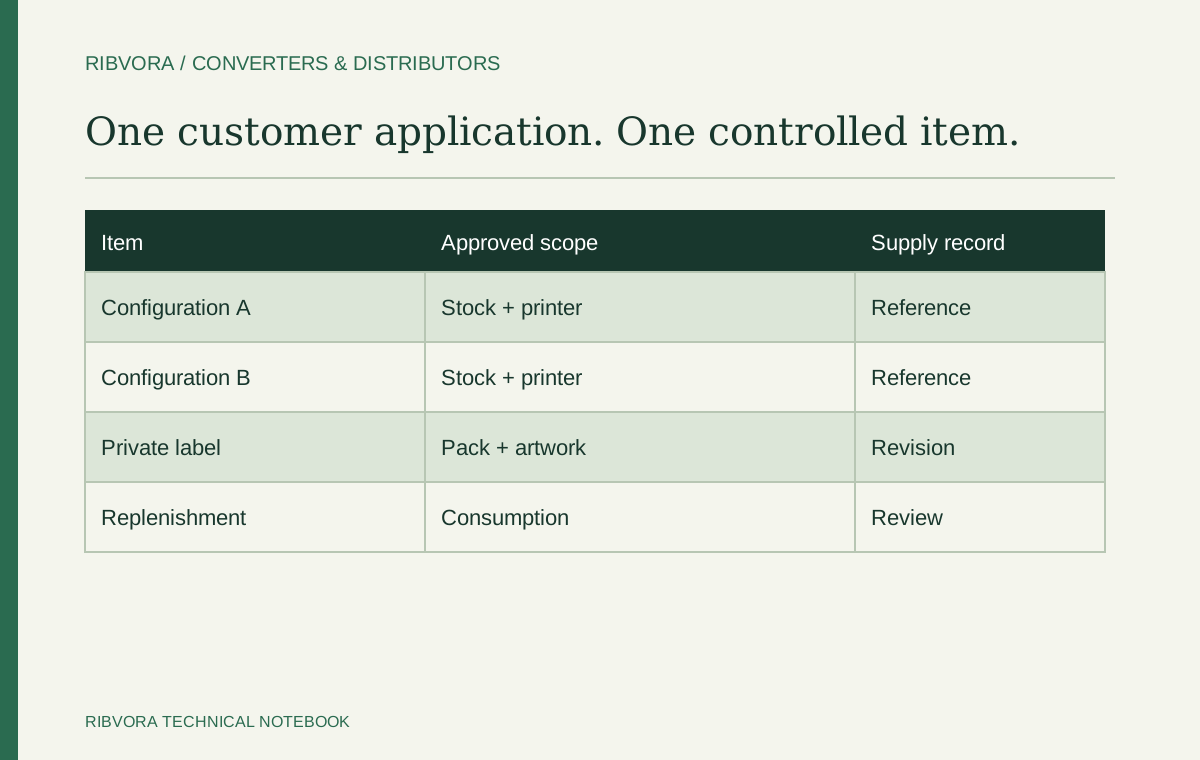
Pick one customer application and identify who supplies the printer details, label reference and approval decision. A narrowly defined first project is easier to evaluate than an undefined request to replace an entire consumables range.
Separate assortment breadth from stock commitment
List the configurations requested by your customers and the demand evidence for each. Availability and order quantities must be quoted. Do not treat an enquiry list as a promise that every variant is stocked.
Build a specification matrix before a price list
Use one line per approved configuration. Keep printer technology, stock and customer approval reference beside the commercial item.
| Item field | Why it belongs in the matrix |
|---|---|
| Formulation + roll | Identifies what is being sold |
| Approved stock / scope | Limits the compatibility statement |
| Quantity and destination | Defines the quotation basis |
| Approval revision | Connects the next order to the trial |
Make sample feedback usable across teams
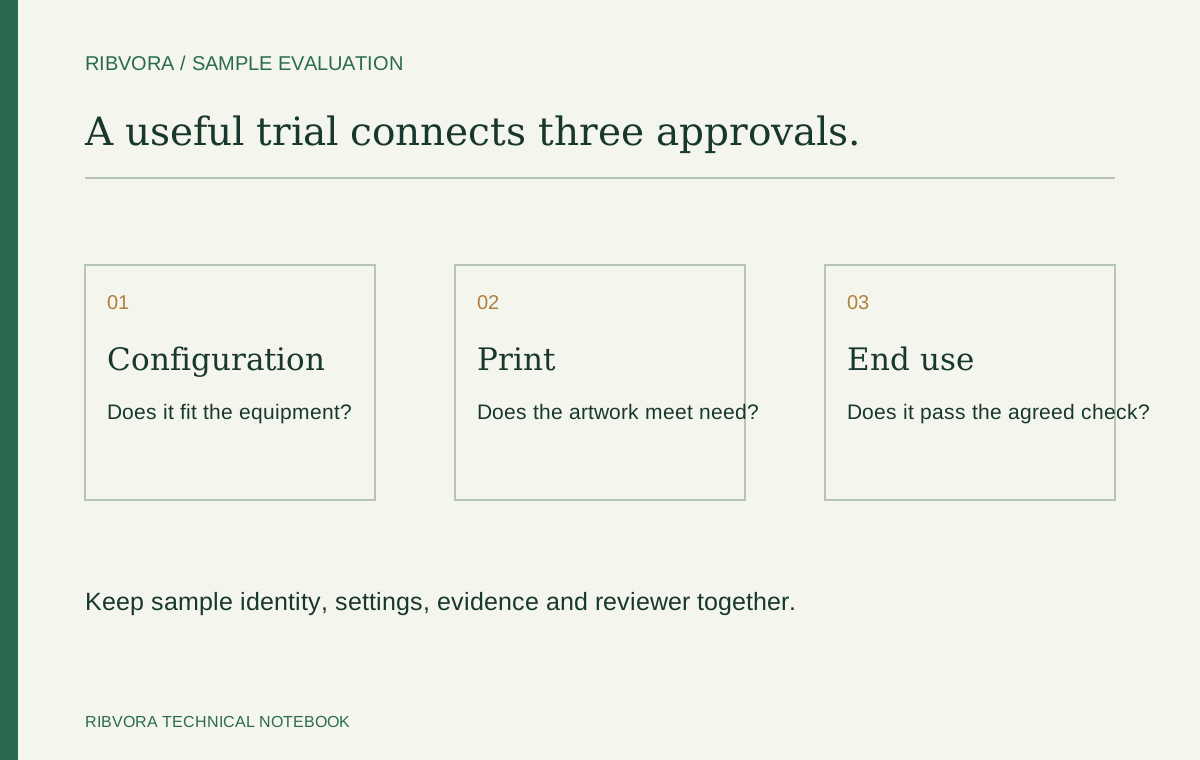
Ask the customer to return the exact stock reference, settings and observed result. “Works well” is difficult to translate into a repeat-order specification. Keep photos and any required code results with the sample identifier.
Resolve packaging and customer identification early
Decide which product reference, winding information and batch identifier appear on each pack. For private-label work, approve the artwork separately from the print-performance trial. Branding does not establish technical equivalence.
Discuss recurring supply with measured consumption
Provide realistic replenishment frequency and the destination for each configuration. Review buffer stock against the actual manufacturer’s storage guidance. Territory, exclusivity and customer-protection terms require a separate agreement.