Industrial
resin ribbons.
For label converters and distributors.
Match your printer, label stock and working conditions before approving the next order.
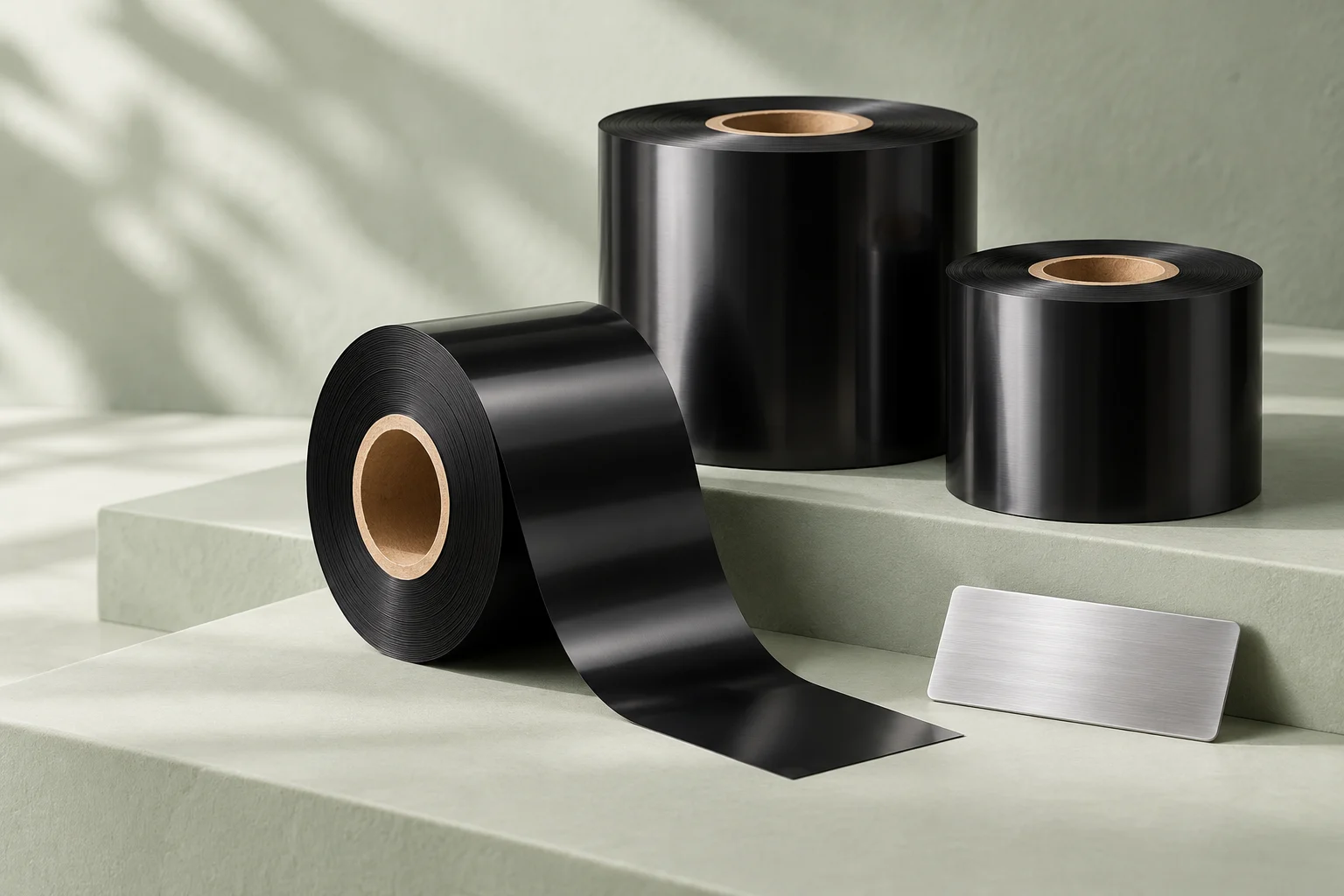
Make the next purchase easier.
Practical tools for a comparable quote, a documented trial and a measured cost decision.
Prepare a comparable RFQ
Copy the fields suppliers need to quote the same requirement.
Printer · roll · material · termsOpen tool ↗02 / PROCUREMENT TOOLCompare usable-label cost
Calculate ribbon cost per 1,000 accepted labels from your trial.
Roll cost ÷ accepted outputOpen tool ↗03 / PROCUREMENT TOOLDocument a sample approval
Keep the setup, exposure checks and decision in one worksheet.
Test plan · evidence · approvalOpen tool ↗The right ribbon starts with the right questions.
A label is only useful if the information survives its working life.
From an electronics nameplate to a component traceability label, the ribbon, material and print setup work together. Start there. Then make the buying process clear.
Explore industrial resin ribbons →Same printer. Different label. Different result.
Explore the material first, then narrow down the specification.
For identification that stays with the product.
Equipment nameplates and component labels often use polyester. Surface coating, print settings and exposure conditions still determine the right ribbon.
Explore this material →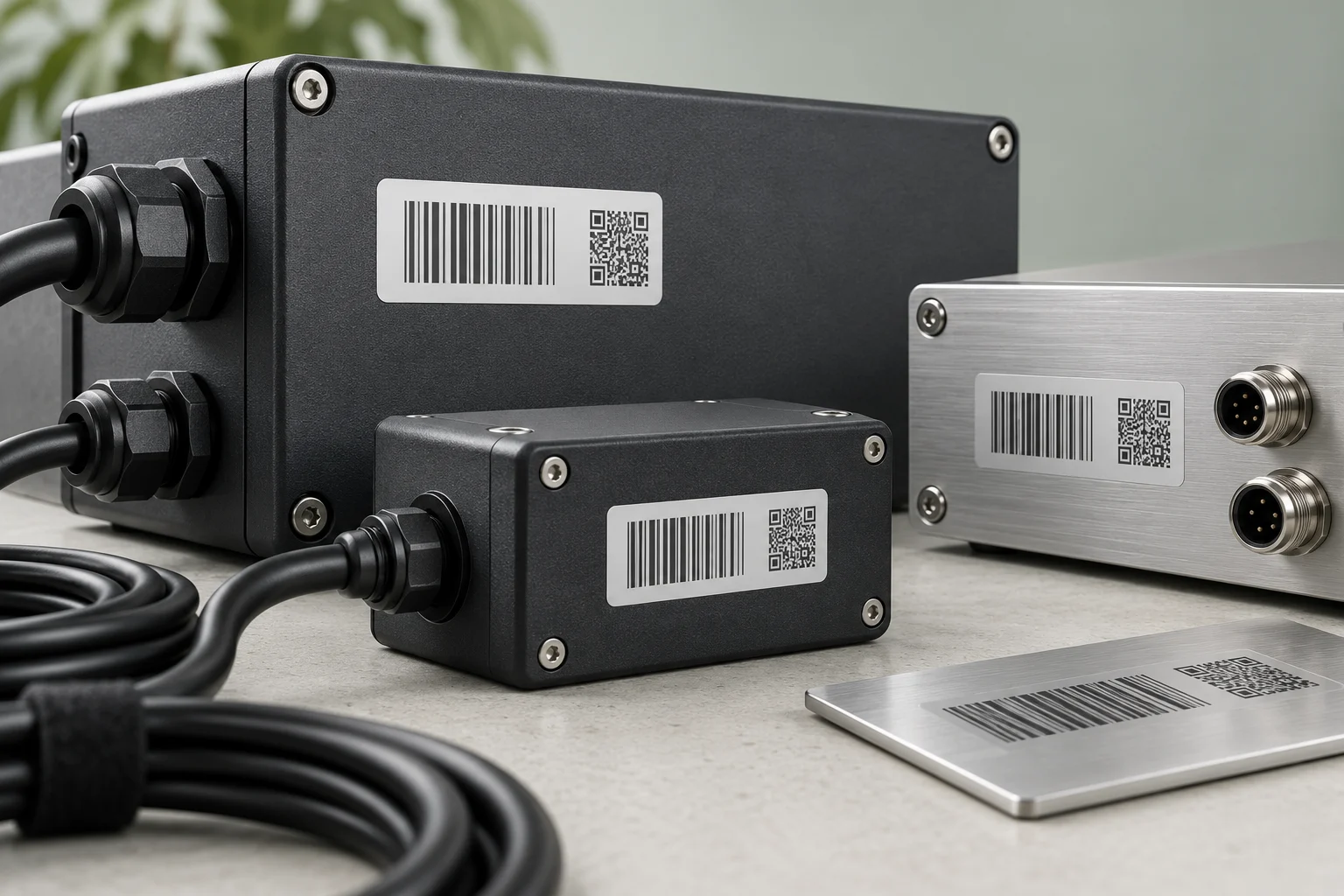
Identification that has a job to do.
Industrial labels face handling, cleaning and changing environments. Define the exposure conditions before deciding what “durable” means for your application.
- Equipment and electronics identification
- Parts tracking and product traceability
- Labels exposed to repeated handling
Start where your labels work.
Compatibility lives
in the details.
A brand name or a roll width is only part of the specification. Get the full configuration right before evaluating print performance.
Build my specification briefSix details. A stronger starting point.
Printer
Exact model, resolution and printhead type.
Material
Face stock, surface coating and label reference.
Roll
Width, length and maximum outer diameter.
Core
Inside diameter, length and any notches.
Winding
Ink side in or out, as required by the printer.
Exposure
Handling, temperature, chemicals and required label life.
Your customer relationships.
Your next supply option.
Discuss a focused specification, a sample evaluation or a private-label project. Start with the products your customers already use.
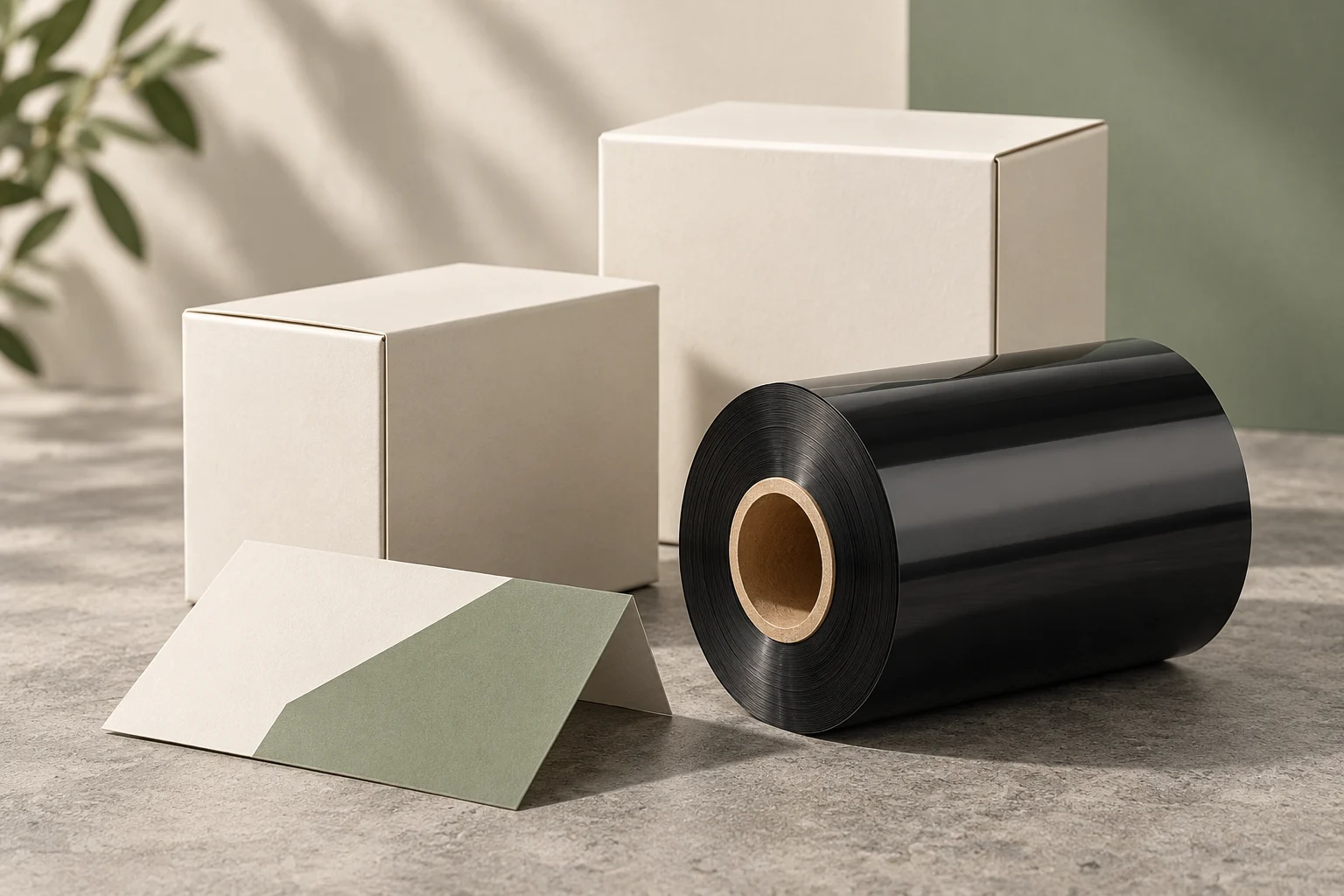
Evaluate the print.
Then approve the order.
A useful trial checks the actual label material, actual printer settings and actual use conditions.
Check density, fine text and barcode readability.
Expose
Use a defined protocol for the intended handling or exposure.
Record
Keep the material, settings and acceptance criteria together.
A practical path forward.
Share
Send your current specification or build a brief.
Confirm
Review the configuration and project requirements.
Evaluate
Agree sample availability and test on your actual materials.
Plan
Confirm order terms, packaging and replenishment needs.
Useful answers. Better decisions.
A few clear answers.
Is resin ribbon suitable for every label?
No. Ribbon selection depends on the label face material, surface coating, printer and end-use conditions. A successful trial on one material does not establish compatibility with every PET or PP label.
Can I match a ribbon by printer model alone?
The printer model is a useful first step. We also need ribbon dimensions, core details, winding direction and label material. A current ribbon part number or label photo can help identify the configuration.
Do direct thermal printers use ribbon?
No. Direct thermal printing uses heat-sensitive media without ribbon. Thermal transfer printing uses a separate ribbon. Confirm your print method before requesting a sample.
Can I enquire about my own branded packaging?
Yes. Share your target specification, packaging artwork requirements and estimated order quantity. MOQ, artwork approval and production lead time must be confirmed for the project.
Are technical certifications available?
Request documents for the exact formulation and intended label combination. Certification scope can depend on both ribbon and label material; a generic resin description is not evidence of compliance.
Your next ribbon.
Matched to your application.
Have a printer model or a current ribbon reference? That’s a good place to begin.